The island's emblem
Chrysopigi, Sifnos
Written by Elena Philippou, who hosts Villa Olivia Clara above Platis Gialos.Updated August 2026
Chrysopigi is the monastery on the rock at the south-east corner of Sifnos, joined to the shore by a short bridge, and the patron of the island. It is 3.2 km by road from Platis Gialos and our house, five minutes, and 1.5 km on the coastal path from Faros. Apokofto, the sandy beach, is on one side. People swim off the rocks on the other.
It is the picture on the postcards and the thing guests ask about before they come. There is a church, two tavernas, a beach and two car parks, and that is all of it. No village. What surprises people is how small the crowd is. You can park, walk out over the bridge, put your head into the church and be in the water inside a quarter of an hour.
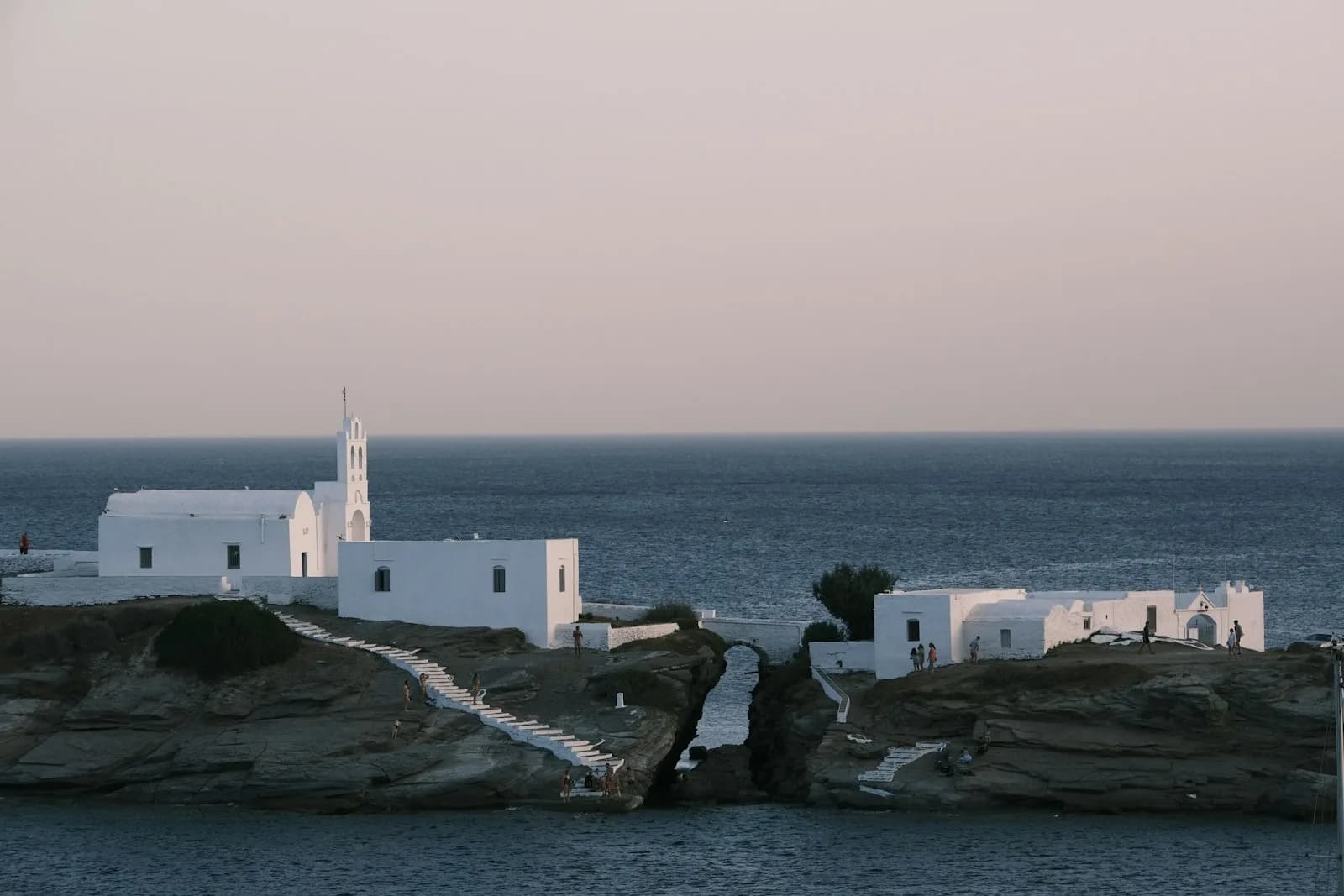
Chrysopigi at a glance
| What it is | A monastery on its own rock, joined to the shore by a short bridge. The patron of Sifnos |
|---|---|
| Beaches | Apokofto on the Faros side, sand and tamarisk shade. The rocks off the headland for stronger swimmers |
| Eating | Two tavernas by the water. Chrisopigi, run by the Lebessis family, and Tsapis at the far end of the beach |
| By road | Platis Gialos 3.2 km | Kamares 13.4 km | Faros five minutes |
| Bus | The Platis Gialos bus stops at the Chrysopigi turn, about 10 minutes on foot from the monastery. The Faros bus and the coastal path take 20 to 25 minutes |
| Walks | Faros 1.5 km on the coastal path, 20 to 25 minutes. Platis Gialos 2.4 km the other way, 35 to 40 minutes |
| Best time | Late afternoon, when the light comes round onto the white walls and the day's swimmers have gone |
Distances are road and footpath kilometres routed over OpenStreetMap. Dates and the festival come from the sources listed on our sources page. Bus timetable and stops
Is Chrysopigi worth visiting?
Yes, and give it longer than the photographs suggest. Most people stop for five minutes, take the picture and drive on. Bring towels instead. You can be on the sand at Apokofto or off the rocks below the church in the time it takes to walk out over the bridge. The church is usually unlocked, so go in. Late in the afternoon you will often have the headland to yourself.
How old is the monastery?
About 1650. The oldest buildings still standing, the old refectory and the cells beside it, are dated 1675, and the church you walk into carries an inscription on its own wall reading 1757. The island's tourism site says 1523. Panagia Chrysopigi was made the patron of Sifnos in 1964, much later than any of the buildings. Her festival is Ascension Day, forty days after Orthodox Easter, and it starts the evening before. The icon is carried round the villages and there is a vigil that runs all night.
Swimming at Chrysopigi
Two swims here, and they suit different people. Apokofto, on the Faros side, is a proper sandy beach with tamarisk trees for shade and water shallow enough at the edge for small children. That is the one to take a family to. The rocks off the headland below the monastery are the local swim, deeper and clearer, and people jump in from them. If you have small children, stay on the sand.
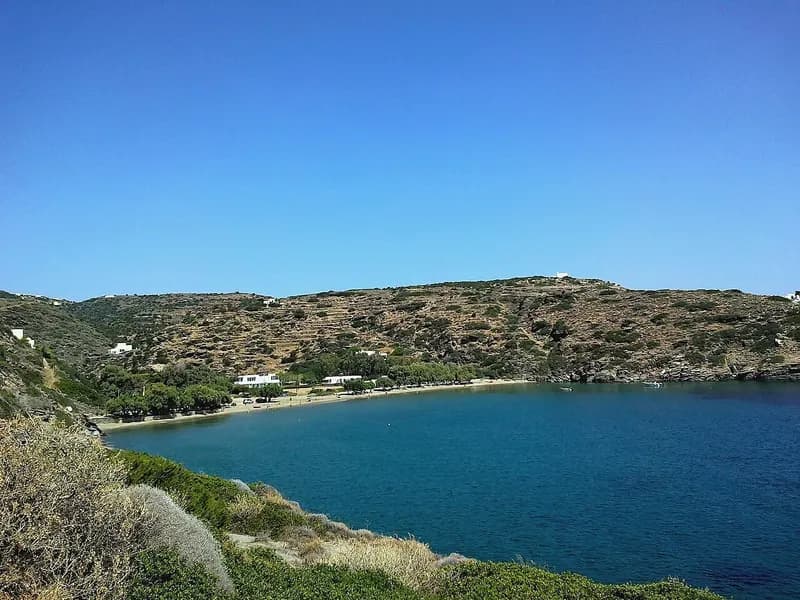
The two tavernas
Both sit on the water, both cook Sifnian food and we send guests to either. Taverna Chrisopigi has been run by the Lebessis family for about twenty years, with tables under the trees looking straight at the monastery, and it is the sheltered one when the wind gets up. Tsapis is at the far end of the beach and is signed To Apokofto as well. The names are close enough that people mix the two up, so know which one you are heading for.
Getting there
By car it is 3.2 km from Platis Gialos, five minutes, and 13.4 km from the port. There are two car parks, one up by the monastery and one down at the beach. In August both fill by late morning. On foot from Faros it is 1.5 km, 20 to 25 minutes on a stone-paved path that is lit at night. From Platis Gialos the coastal path runs 2.4 km the other way, 35 to 40 minutes. The Platis Gialos bus stops at the Chrysopigi turn on the main road, which leaves you about 10 minutes from the monastery on foot. Coming by Faros takes longer. It is also the nicer way to arrive.
Faros, the village at the other end of the pathBus timetable and stops
From the villa
Chrysopigi is the short evening outing from the house. Five minutes by car, or the coastal path from Platis Gialos if you would rather walk it. Guests tend to go once for the photograph and then again with towels.
What we tell guests before they go
There are no shops and no square here, and nothing in the evening. It is also not the Chrysopigi near Chania in Crete, which is a working convent and a different place entirely. The two get confused constantly, search engines included. And the bridge is short and low, so in a hard southerly the spray comes over it. On those days, look at it from the beach.
Chrysopigi, Sifnos: common questions
Can you go inside the church at Chrysopigi?
Usually, yes. It is normally unlocked and you can walk in. It is a church, so dress and behave as you would in one, and if a service or a wedding is on, wait outside.
Is there a beach at Chrysopigi?
Yes, Apokofto, on the Faros side. Sand, tamarisk shade and water that is easy for children. The rocks below the monastery are the other swim, deeper and clearer, and that is where local swimmers go in.
How do you get to Chrysopigi without a car?
Nothing stops at the monastery itself, but the Platis Gialos bus stops at the Chrysopigi turn on the main road, about 10 minutes away on foot. The prettier way in is the bus to Faros and the last 1.5 km on the coastal path, 20 to 25 minutes, on stone paving that is lit at night. From Platis Gialos the same path runs 2.4 km the other way, 35 to 40 minutes.
When was the Chrysopigi monastery built?
Around 1650. The oldest buildings still standing are dated 1675, and the church itself carries an inscription reading 1757. The island's tourism site says 1523. Panagia Chrysopigi became the patron of Sifnos in 1964.
Is this the same as the Chrysopigi monastery in Crete?
No. There is a Chrysopigi convent near Chania in Crete, a different foundation entirely, and searches for the name return both. Ours is the monastery on Sifnos, on the headland between Faros and Platis Gialos.
Is there anywhere to eat at Chrysopigi?
Two tavernas by the water. Taverna Chrisopigi, run by the Lebessis family for around twenty years, looks straight at the monastery and is the sheltered one when the wind gets up. Tsapis, at the far end of the beach, is signed To Apokofto as well.
Chrysopigi is five minutes from the house
Our house is above Platis Gialos, five minutes by car from Chrysopigi or a coastal walk away if you would rather walk it. Tell Elena your dates and she will tell you when the light is best and where to swim once you are there.