How we run the villa
What is installed, what it produced in its first season, and the list we are still working through.
Solar panels went on the roof in June 2026. Below is what is installed, where the island's power and water come from, and what we have not solved. The figures are the inverter's own, with the dates they were taken.
The energy system
Here is what is installed and what it can do so far.
- Solar array
- Around 10 kWp when the rest of it is up. Only part is live so far and there is no battery yet, so the panels only cover daytime use.
- Grid export
- None, for now. The connection paperwork is not through, so the inverter only makes what the house is drawing at that moment. On a bright day with the house quiet, it holds back.
- Hot water
- A solar water heater. There is an electric back-up element, and the panels feed it in the morning.
- Grid supply
- Matched kilowatt-hour for kilowatt-hour with Guarantees of Origin from certified Greek renewable generation. That is what we pay for. What comes down the cable to the house is another thing.
Between 2026-06-10 and 2026-08-22, over 66 whole days, the house used 4,061 kWh of electricity and our own panels supplied about 39% of it. The other 2,444 kWh came off the island grid. The best single day generated 44 kWh. Over the whole period the array exported essentially nothing, because it still is not allowed to. These are the inverter's own daily readings, taken on 2026-08-23. We left out five days where the log held two readings that disagreed.
Where the island's power comes from
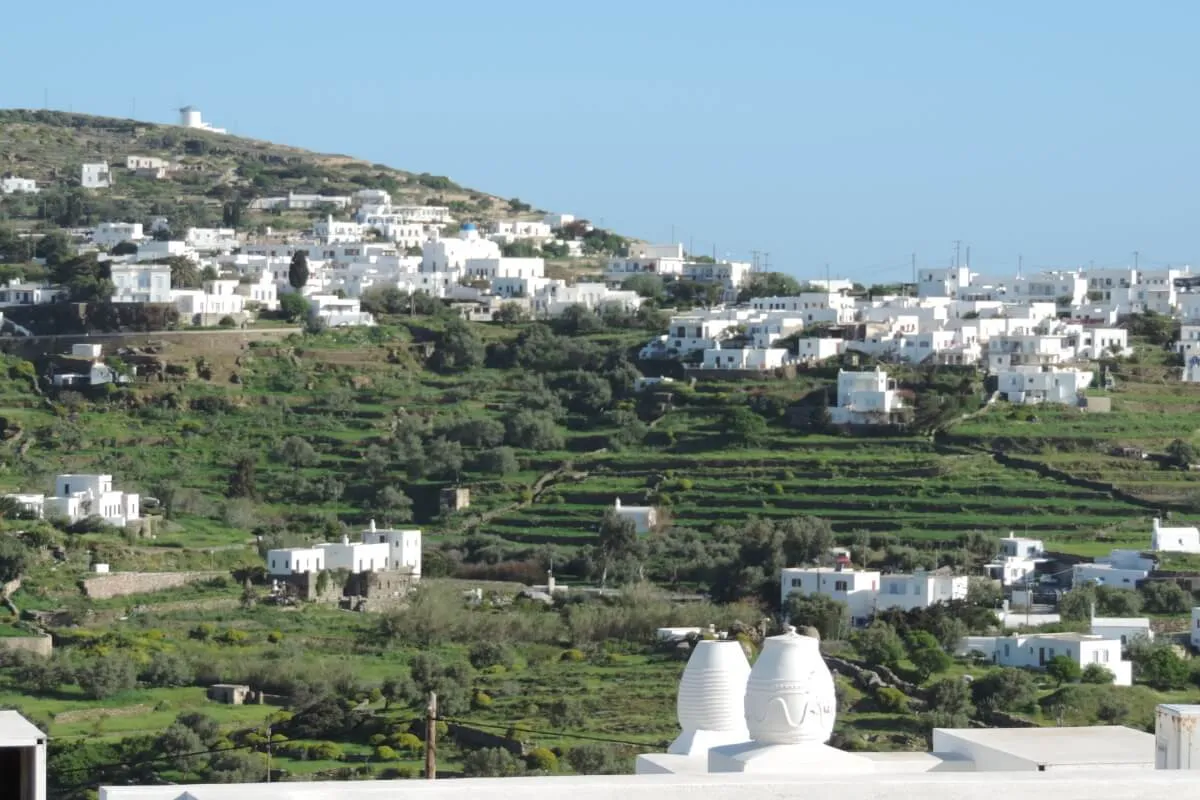
Sifnos still runs on its own small grid. Around 85% of its electricity comes from the island's diesel generators, topped up by two small wind turbines and a little solar. The mainland connection reached our neighbours in 2026 (the new Cyclades cable now ties Milos, Serifos, Folegandros and Santorini to the national grid). Sifnos is still waiting for its own link. A local cooperative has spent a decade pushing for an island-owned wind-and-storage plant.
Water is the island's other problem. Sifnos runs on boreholes, springs, old rainwater cisterns and seawater desalination, and desalination burns electricity off that same diesel grid. In high summer the population multiplies and water gets tight.
What we do
We put the panels up in June 2026. Not all of them are live yet and there is no battery, so they cover the daytime.
Hot water comes from a solar water heater. The electric back-up element runs on the panels in the morning.
We water the garden from the house's old rainwater cistern, and we fill the pool from it too. All of it is winter rain.
Our electricity comes with Guarantees of Origin from certified Greek renewable production, matched kilowatt-hour for kilowatt-hour. The cable into the house still carries mostly diesel-generated power.
Refillable pump bottles in the bathrooms. We got rid of the little single-use ones.
We buy local and recommend local. The producers here are good.
What we're upgrading
The working list, in the order we want to get to it.
- 1
Battery storage, so the new solar panels keep working after sunset.
- 2
A heat pump, to get off the winter heating oil.
- 3
Insulation for the walls, the windows and the roof.
- 4
An electric or plug-in hybrid car for the errands we run for the house.
We will mark them off here as they happen.
What we haven't solved
You will probably fly to Greece, and we cannot change that. Until the island's cable arrives our electricity is mostly diesel-generated whatever we sign, and in winter the house still burns heating oil. Almost everything on the island arrives by ship.
What this means for your stay
Your week does not get harder. The pool is full and the showers are hot. We do ask a few things. Reuse towels where you can. Run full loads in the washing machine, because every load is island water. And close the doors when the air conditioning is on. If you want to know more about any of it, ask Elena over coffee.
Questions about any of this?
Ask Elena. She will tell you what is done and what is still on the list.