Written by Elena Philippou,Updated June 2026
Sifnos has an outsized reputation for food relative to its size — and it is earned. The tradition is clay-pot, slow-cooked, local-ingredient cooking.
Sifnos is the home island of Nikolaos Tselementes, the chef whose 1910 cookbook effectively shaped modern Greek cooking. The local food tradition predates him: it centres on chickpeas, capers, local cheeses, honey, almonds, and slow cooking in the island's own pottery. The clay cookware is not incidental — Sifnos has produced cooking vessels for the Cyclades for over 3,000 years, and the pots and the dishes evolved together.

Chickpeas slow-baked overnight in a sealed clay pot. The canonical Sunday dish — many restaurants only serve it on Sundays, and sell out by early afternoon. It arrives in the pot it cooked in, deeply savoury, nothing like the boiled chickpeas you know from elsewhere.
Lamb or goat slow-cooked on vine shoots in a sealed clay pot — the Easter dish. The vine shoots give a subtle smokiness. If you see it on a menu outside Easter, it was made with care and is worth ordering.
Chickpea croquettes, crisp outside and soft inside. More common than revithada day-to-day; a reliable order at most tavernas.
Soft almond sweets — not cookies in the hard sense, but dense, moist, almond-paste rounds dusted with powdered sugar. The island's signature sweet; Theodorou bakery in Artemonas does them properly.
Two to look for: manoura, an aged cheese ripened in red wine marc (has a dark rind and a firm, pleasantly sharp interior); and xinomizithra, a fresh soft cheese, slightly sour, eaten young. Both are made from sheep and goat milk on the island.
Sifnos has a strong caper tradition — the island grows them wild, and they appear in salads, over fried cheese, and with fish. Wild greens (horta) vary by season and cook.
This is the list Elena sends to friends who visit — the places we book ourselves, grouped by the kind of evening you want. Reserve the finer ones ahead in July and August.
These are our picks — we cannot guarantee current opening hours or menus, and the owners do change. Confirm before you drive across the island.
The beachfront here is table-service and busy in August, with good grilled fish. Omega 3 is the standout, a small fish restaurant that regulars come back to every year. Book for dinner in peak season.
The Steno, Apollonia's pedestrian street, has the most variety on the island, everything from simple grills to more ambitious modern Greek cooking. To Steki is a local favourite, unpretentious, known for its meat and its honesty about what is good that day. The Apollonia strip suits a night when you want to browse before you sit down.
Go here specifically for the bakeries. Theodorou on the main lane is the place for amygdalota — buy them the morning you leave, they travel well. Local honey and almond-based sweets are also sold in the village shops.
A working fishing cove at the top of the island, 25 minutes by road from Apollonia. The fish is as fresh as it gets on Sifnos — caught that morning. A handful of tavernas operate in summer; they close early when the catch runs out. Worth the drive if you want the freshest possible fish in the simplest possible setting.
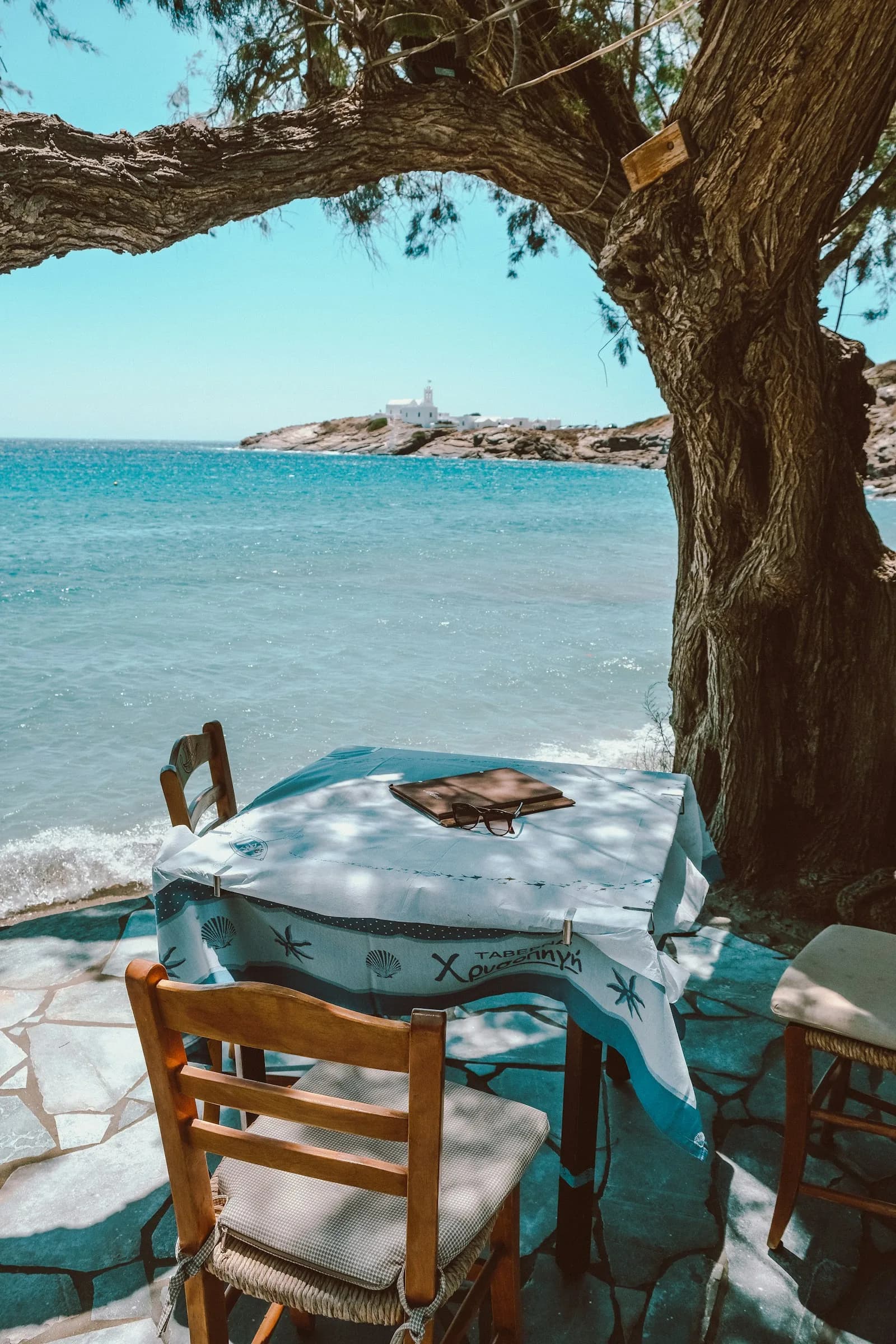
Smaller seaside tavernas, quieter than Platis Gialos, with views over sheltered bays. Good for lunch after a swim. Seasonal — some open only July and August.
Beyond Theodorou in Artemonas: most villages have a local baker. Look for the island's loukoumi (rose-scented gelée sweets), local honey (thyme honey in particular, from bees that feed on the island's hillsides) and sesame-honey treats. Most sweets travel well and make better souvenirs than anything from a gift shop.
Reserve for dinner in August — the good places fill up, and showing up at 9pm without a booking in peak season is a gamble. Most restaurants are seasonal: many close roughly November to March. The villa has a full kitchen if you want to cook; we can also arrange a private chef for a special dinner.
About the villa kitchen and private chefSifnos is known for revithada (chickpeas baked overnight in clay), mastelo (lamb or goat on vine shoots), revithokeftedes (chickpea croquettes), amygdalota (almond sweets), local cheeses manoura and xinomizithra, and caper dishes. The island's clay-pot cooking tradition goes back millennia, and Nikolaos Tselementes, whose 1910 cookbook shaped modern Greek cuisine, was born here.
Revithada is the signature dish of Sifnos: chickpeas slow-baked overnight in a sealed clay pot, traditionally in the communal wood-fired oven. The slow, sealed cooking makes them deeply savoury and completely different from boiled chickpeas. It is the Sunday dish — many restaurants only serve it on Sundays and run out before early afternoon.
Mastelo is lamb or goat slow-cooked on vine shoots inside a sealed clay pot — the Easter dish of Sifnos. The vine shoots impart a subtle smokiness. It is specific to Sifnos and the Easter season, though some restaurants serve it outside Easter when they have sourced the ingredients. The name comes from the clay vessel it is cooked in.
Omega 3 and Yalos are the two beachfront names worth knowing at Platis Gialos. Omega 3 is small, and regulars return specifically for its fish; Yalos sits right by the sand with a broader modern-Greek menu. Both are busy in August and worth booking ahead for dinner in July and August.
Yes, more than most islands of its size. Sifnos has a documented culinary tradition going back centuries, and local restaurants still cook the traditional dishes (revithada, mastelo, revithokeftedes) alongside standard taverna fare. The food scene is not just marketing: it is specific to this island, rooted in its pottery, its chickpea farming, and its culinary history.
Most restaurants on Sifnos are seasonal and close roughly November to March. Apollonia keeps a handful open year-round, but the beachfront places, including those at Platis Gialos, typically close for the off-season. If you are visiting outside peak season, check directly with the restaurant before you plan your evening around it.
Villa Olivia Clara is in Platis Gialos, a short walk from Omega 3 and the beachfront restaurants, and a 15-minute drive from Apollonia and Artemonas. We can suggest where to eat based on your group and the evening.