The medieval capital
Kastro, Sifnos
Written by Elena Philippou, who hosts Villa Olivia Clara above Platis Gialos.Updated August 2026
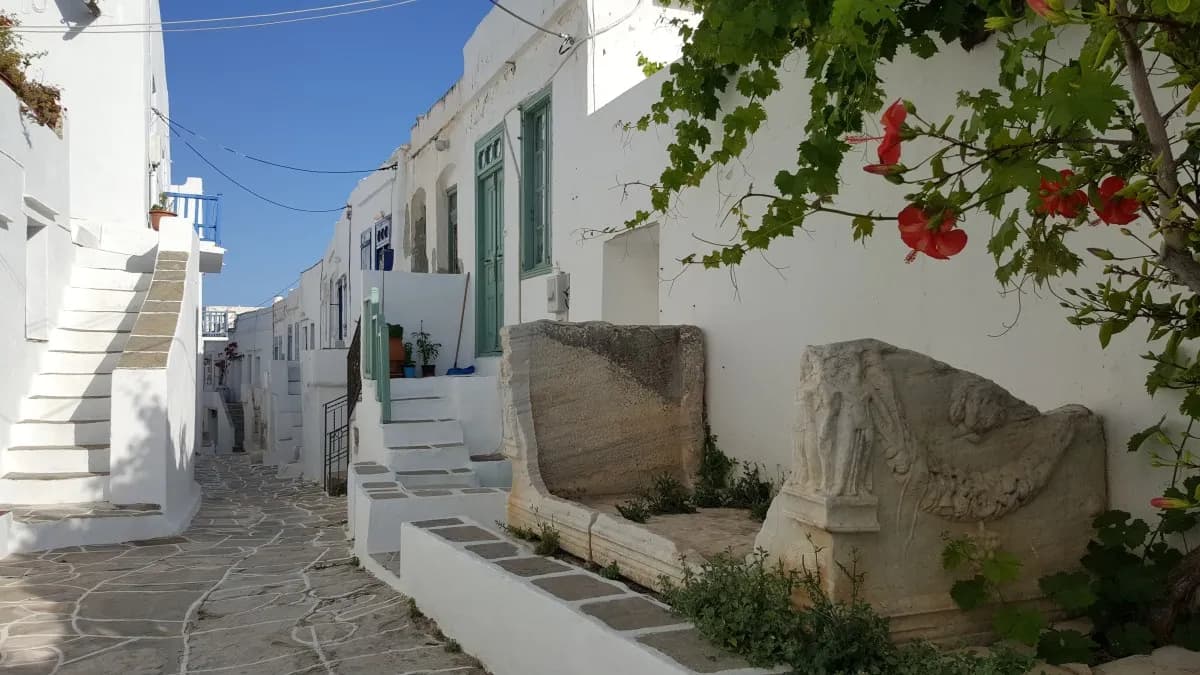
Kastro is the medieval capital of Sifnos. It sits on a cliff on the east coast, a fortified village where the outer houses are the wall and the lanes pass under them. It faces east, so this is the village for sunrise. Apollonia is 2.5 km away on the old footpath, or a short ride on the bus, and Platis Gialos and our house are 11.9 km by road.
It is the oldest place on the island still lived in, and the one with the most atmosphere. And it is slow. You walk the loop, read the coats of arms above the doors, climb down to the Seven Martyrs chapel on its rock, swim at Seralia and eat by the water. Don't pick it as a base for a beach holiday. The lanes are stepped and luggage is hard work. Come in the late afternoon, when the day-trippers have thinned out and the light is soft, and stay for dinner.
Kastro at a glance
| What it is | The fortified medieval capital, on a clifftop on the east coast. One knot of stepped lanes |
|---|---|
| Beach | Seralia, the cove below the village. On a flat-calm day, the rocks under the Seven Martyrs |
| Eating | Cantina at Seralia for dinner by the water, and Verina Astra nearby, dinner only from seven. In the lanes, Loggia for the wine and the view, and Dolci |
| By road | Kamares 8.4 km | Platis Gialos 11.9 km, about 20 to 30 minutes |
| Bus | A shuttle to Apollonia, ten a day each way, 07:25 to 22:05. €2.50 from Platis Gialos, €3.50 from the port, €2.20 from Artemonas |
| Walks | Apollonia 2.5 km on the kalderimi. Poulati monastery about 25 minutes along the coast. The Seven Martyrs 10 to 15 minutes down |
| Best time | Sunrise if you sleep here. Late afternoon and dinner if you don't |
Distances are road and footpath kilometres routed over OpenStreetMap. Bus times and fares are the municipality's summer 2026 timetable. Bus timetable and stops
Is Kastro worth visiting?
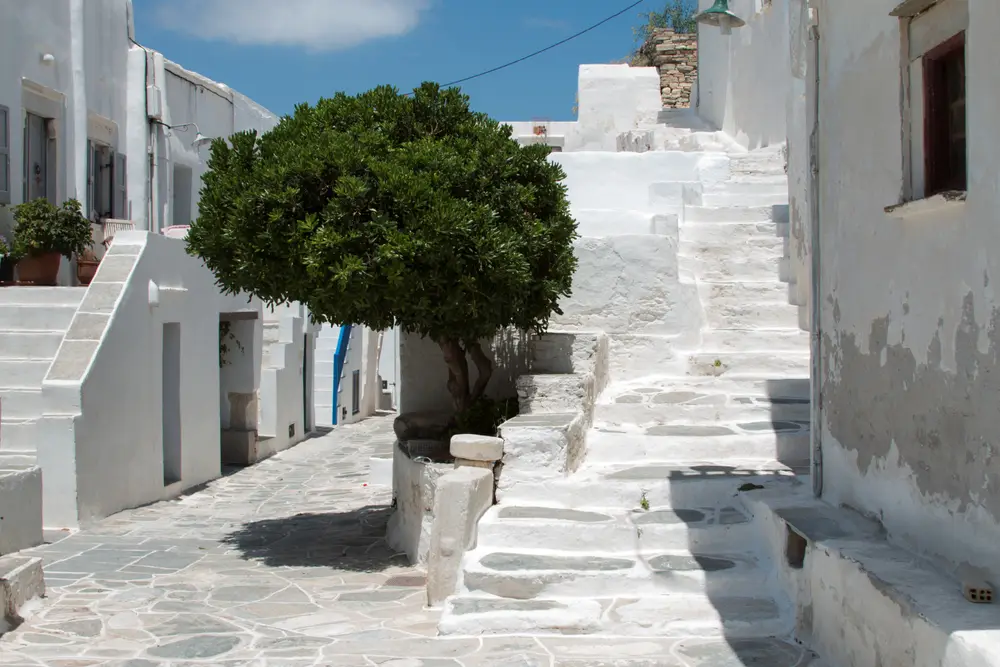
Yes. Of all the villages on Sifnos this is the one not to miss. It is still laid out the way it was built, a ring of houses with their backs to the sea and covered passages running between them, and there are marble fragments and Venetian crests set into the walls. Couples fall for it hardest, and photographers. To stay, it suits people who want the atmosphere more than anything and don't mind stairs. There are not many rooms, and every swim ends with a climb back up.
A village built as a fortress
People have lived on this hill since the third millennium BC. Kastro was the capital of Sifnos from antiquity, through the medieval and Venetian centuries, until 1836, when it moved to Apollonia. The outer houses are the wall, backs to the sea, with hardly a gap between them. The lanes run inside and under them. The small Archaeological Museum in the village has finds from all of that history, among them pottery from the Geometric period. Sifnos was making pots even then, and still does.
The walk round the outside, and the Seven Martyrs
Twenty minutes is enough for a loop round the outer edge of the village, and that is where the views are. The whitewashed houses sit right on the edge of sheer rock, and below you, on a rock of its own, is the Eptamartyres, the chapel of the Seven Martyrs. A flagstone path goes down to it in 10 to 15 minutes. When the meltemi blows the spray reaches the chapel courtyard, so swim off the rocks there only on a flat-calm day. The coastal path north to the Poulati monastery is about 25 minutes on foot.
Eating in Kastro
Dolci is open through the day from noon, which matters in a village where most things are not. Loggia is the wine bar and it does not open until seven, so go there for a glass and eat somewhere else. Kavos Sunrise is a bar too, from six. The serious dinner is Cantina, down the steps at Seralia, and that one needs booking weeks ahead.
Seralia, Cantina and the swim
A steep path and a short road go down from Kastro to Seralia, the village's little harbour. It is a sheltered cove with boats in it, a small beach and tables right at the water. The restaurant is Cantina, modern Greek cooking and seafood at the high end. Barack Obama and Tom Hanks ate there in June 2023. Swim first, then dinner. That is how we tell guests to end an afternoon in the lanes. Book ahead in season.
Sunrise at Kastro, and the bars
Kastro faces east and the sun comes up out of the Aegean right in front of it. If sunrise matters to you, sleep here. The light on the houses in the first hour is the reason photographers stay the night. Loggia, the wine bar, looks out the same way over the sea and has a good list of Greek wines. It opens at seven in the evening, so go for a drink and eat somewhere else. Dolci is the other one in the lanes. The Verina Astra restaurant nearby does dinner only, from seven. And for sunset go west, to Kamares or up to the Profitis Ilias summit.
Getting there, by bus or on foot
Kastro is 8.4 km by road from the port and 11.9 km from Platis Gialos, about 20 to 30 minutes by car. A separate bus shuttles between Kastro and Apollonia ten times a day each way, first at 07:25 and last back out of Kastro at 22:05. Every two hours or so through the day, closer to hourly in the evening. A one-way ticket is €2.50 from Platis Gialos, €3.50 from Kamares and €2.20 from Artemonas. The old kalderimi from Apollonia is 2.5 km over open hillside, about 45 minutes. Walk down in the afternoon and take the bus back. You leave the car at the entrance and walk in.
Kastro and the villa
Kastro is on the far side of the island from us, 11.9 km and about 20 to 30 minutes by car. From the house it is an easy half-day. Go in the late afternoon, swim at Seralia and have dinner at Cantina, or dinner in Apollonia on the way back.
What we tell guests before they come
Not many places to stay, and they go early. The lanes are stepped, so heavy luggage is a struggle, and anyone who finds stairs hard will find the whole village hard. No beach at the village itself. A swim means the climb down and a steeper climb back up. When the meltemi blows, Kastro gets all of it. Out of season most places close and the Archaeological Museum keeps short hours, so check before you go.
Kastro, Sifnos: common questions
What is Kastro in Sifnos?
The medieval capital of the island, a fortified village on a cliff on the east coast. It was the capital from antiquity until 1836, when it moved to Apollonia. Venetian crests above the doors, covered lanes, white chapels above the sea.
What is there to see and do in Kastro?
Walk the loop of the outer edge, twenty minutes. Go into the small Archaeological Museum. Climb down to the Seven Martyrs chapel on its rock, then swim and eat at Seralia below. And if you sleep here, get up for the sunrise.
What does kastro mean?
Kastro is the Greek word for castle, or fortress. A lot of the Cycladic islands have a village called Kastro, the old fortified village built up high where it could be defended. Ours is the old capital, on the cliff on the east coast.
Is there a beach at Kastro?
Seralia, the small harbour cove just below the village. It is a short steep walk down, or you can drive, and there are tables on the water. On a flat-calm day people also swim off the rocks under the Seven Martyrs.
How do I get to Kastro from Apollonia?
The shuttle bus, ten a day each way from 07:25 to 22:05. Or walk the old kalderimi, 2.5 km and about 45 minutes over open hillside.
How far is Kastro from Platis Gialos?
11.9 km by road, about 20 to 30 minutes by car. The bus is €2.50. It makes an easy half-day from the house, with dinner in Apollonia on the way back.
Is Kastro good for sunset?
No. Kastro faces east. It is the sunrise village, and the loop round the outside is where to watch it from. For sunset go west, to Kamares or the Profitis Ilias summit.
Which part of Sifnos is best to stay in?
Kastro for the atmosphere and the sunrise, Apollonia if you want village evenings and the bus to everywhere. Platis Gialos when the holiday is built around the beach, with or without a car, and Faros or Vathi if you want a quieter beach. Our where-to-stay guide compares all eight, with the distances and bus times.
Kastro from our house
Villa Olivia Clara is our house above Platis Gialos, an easy drive from Kastro and from the rest of the island. Send Elena your dates and she will help you plan the days.