The Churches of Sifnos
Written by Elena Philippou, who hosts Villa Olivia Clara above Platis Gialos.Updated June 2026
237 by the municipality's count, on an island about 15 km end to end. Why there are so many, and the nine to go and see.
The municipality counts 237 churches and monasteries, and says that for an island this size it is more than anywhere else in the Cyclades. Most of them are small private chapels. A sailor's family built one for a safe return, or for a prayer answered. Or in memory of someone. It has come down through the family since, and the family still does the whitewashing and keeps the lamp lit.
You do not need to see them all. Pick a handful from the nine below. And if a panigiri falls inside your dates, go to that first.
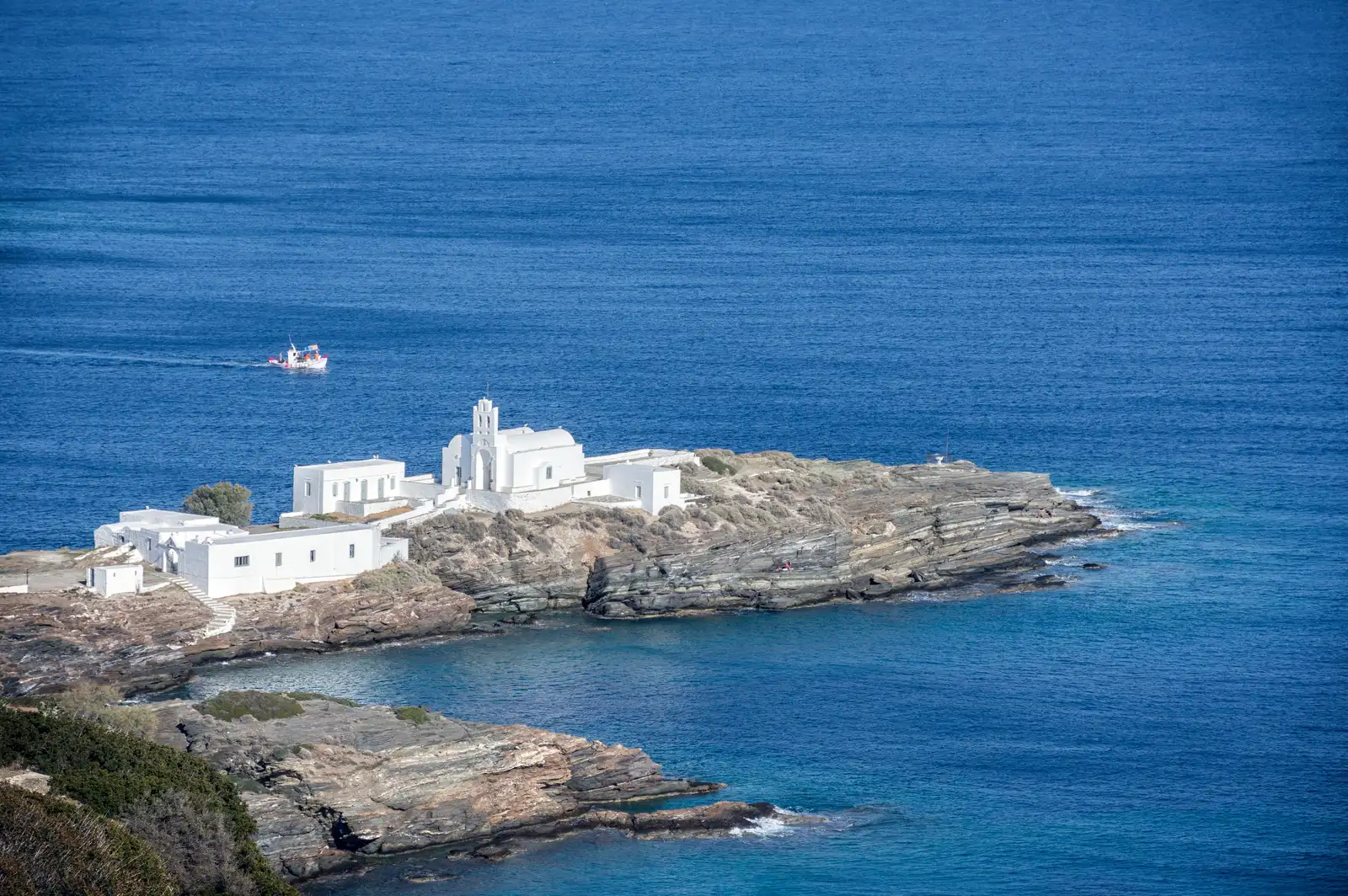
Chrysopigi, the island's patron
The white monastery on its own rock at the far end of Apokofto beach. You have seen it already, it is the photo of Sifnos. A church has stood there since around 1650 and the one you see now was rebuilt in 1757. Two stories go with it. Fishermen found the icon of the Virgin glowing in the sea. And the cleft in the rock, the one you cross by a footbridge, they say it opened on its own to cut off pirates while the women prayed inside. Panagia Chrysopigi has been the island's official patroness since 1964.
Her feast is the biggest night of the year on Sifnos. It falls on Ascension Day, forty days after Orthodox Easter, so the date moves. It starts the evening before. In 2026 that is the 20th of May, running into the 21st. Why Ascension? By island tradition the Virgin stopped a plague on Ascension Day 1676, after it had taken many islanders. The icon goes to Kamares and comes back to the monastery by boat with a small flotilla behind it, then vespers and a shared supper and a vigil that lasts all night. It is the one icon on Sifnos that never leaves the island.
Nine churches to visit
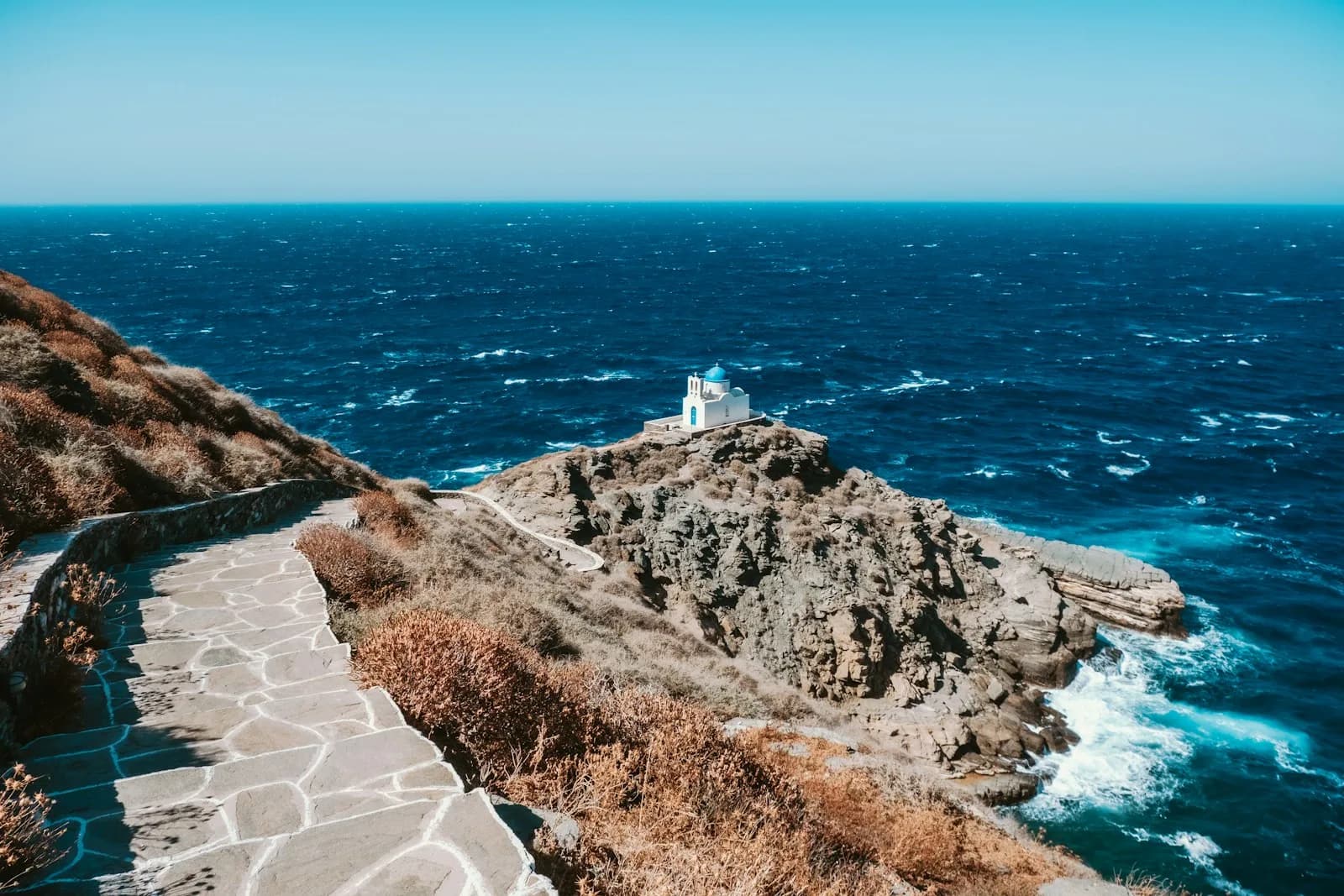
Eptamartyres (the Seven Martyrs)
Below Kastro | 10–15 min down a flagstone path
The lone chapel on its rock below Kastro, dedicated to the Seven Sleepers of Ephesus. The meltemi hits it full on, and when the wind is up the spray reaches the courtyard. Swim off the rocks on a flat calm day only.
Panagia Poulati
Between Artemonas and Kastro | best on foot from Kastro, about 25 min
A blue-domed church from 1870 above a turquoise cove, at the end of the coast path from Kastro, and that walk is lovely. The feast here is the Dormition, the 14th into the 15th of August. Bring a mask for the cove below.
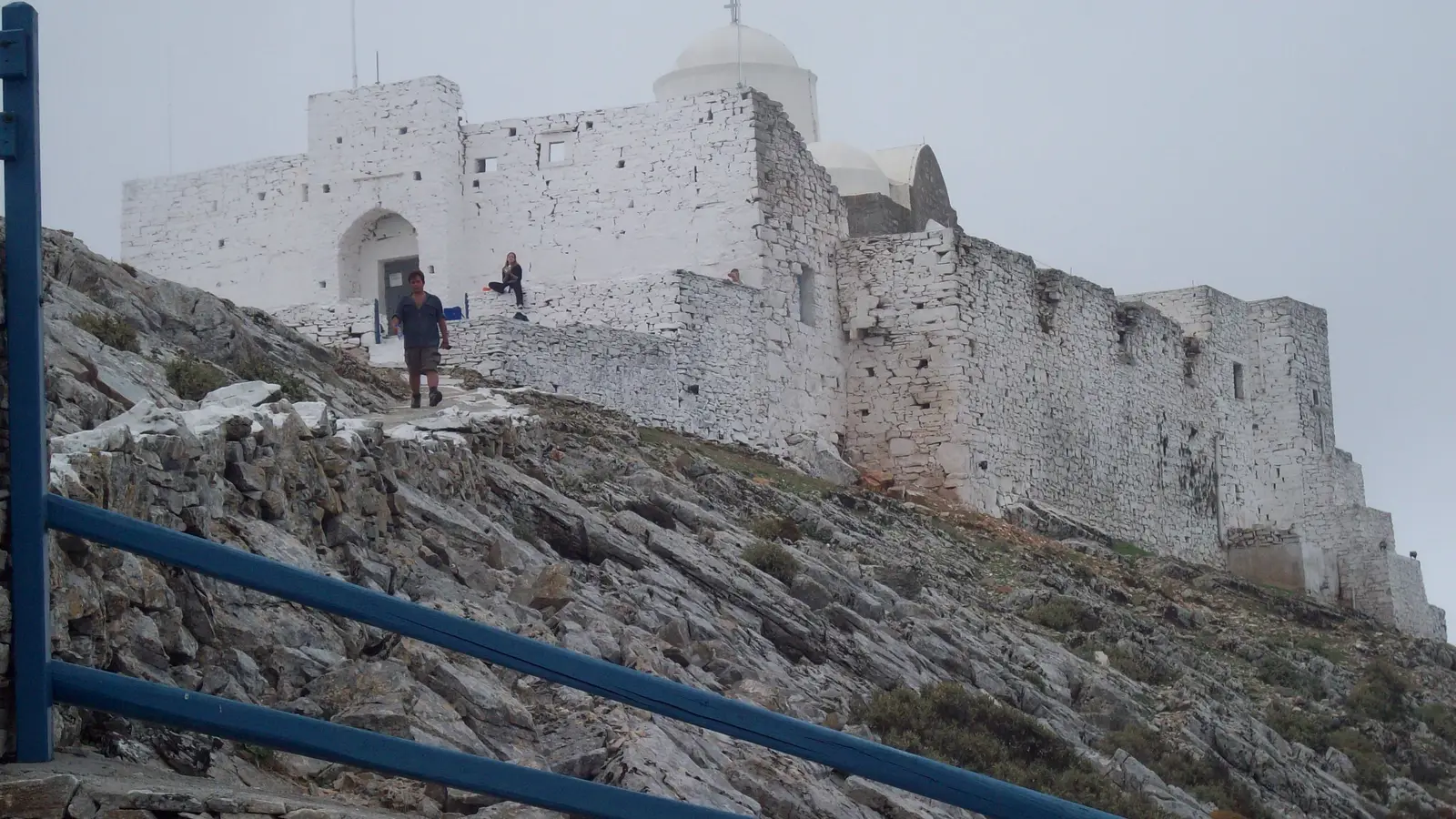
Profitis Ilias tou Psilou
The island's summit, 682 m | on foot only, about 1h50 one way from Firogia on the official trail
A fortress of a monastery on the highest point of Sifnos. The walls are 17th century and there are galleries underground, and from the top you have the whole island below you. On the 19th of July the islanders walk up in the evening and eat chickpeas and braised goat by the church, and they come down after the morning liturgy.
Panagia Vrysiani (Moni Vrysis)
Below Exambela | a short drive from Apollonia
The largest monastery on the island, built in 1642. It has a Museum of Ecclesiastical Art inside, with manuscripts, vestments and a New Testament printed in 1796. Its panigiri is on the 7th of September.
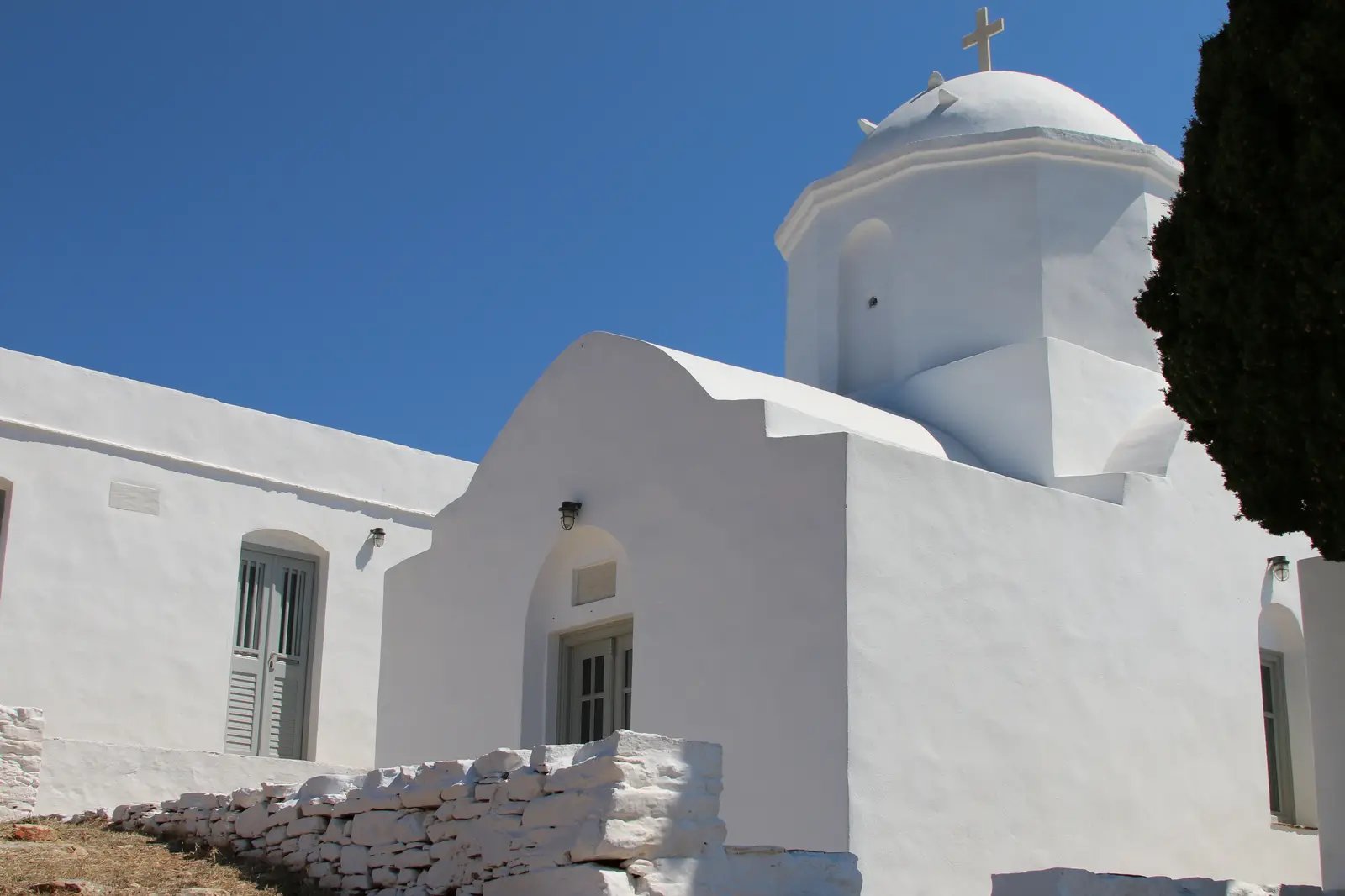
Agios Andreas
Hilltop south-west of Apollonia | drive up, then steps
A whitewashed chapel inside the walls of a Mycenaean citadel from the 13th century BC. The museum on the site opened in 2010, and the restoration won a Europa Nostra award in 2012, the EU Prize for Cultural Heritage in the conservation category. And the view from up there is very good.
Panagia tou Vounou
Off the Apollonia–Platis Gialos road | an easy stop
“The Virgin of the Mountain”, built in 1813 on a cliff above Platis Gialos bay, looking out to Kimolos and Polyaigos. In summer there are concerts here. For us it is the sunset stop on the way home.
Agios Symeon
Above Kamares, about 470 m up
A chapel of 1667 high up above Kamares. In the courtyard, a ceramic map of the Cyclades that Sifnian potters made. Feast on the 31st of August, one of the best loved on the island, and from up here the sunset over Kamares bay is the finest on Sifnos.
Agios Sostis
North-east coast, near Troulaki
A blue-domed church on its own above the sea, next to silver mines worked as early as the third millennium BC. It is windy up there and very quiet. Feast on the 6th of September.
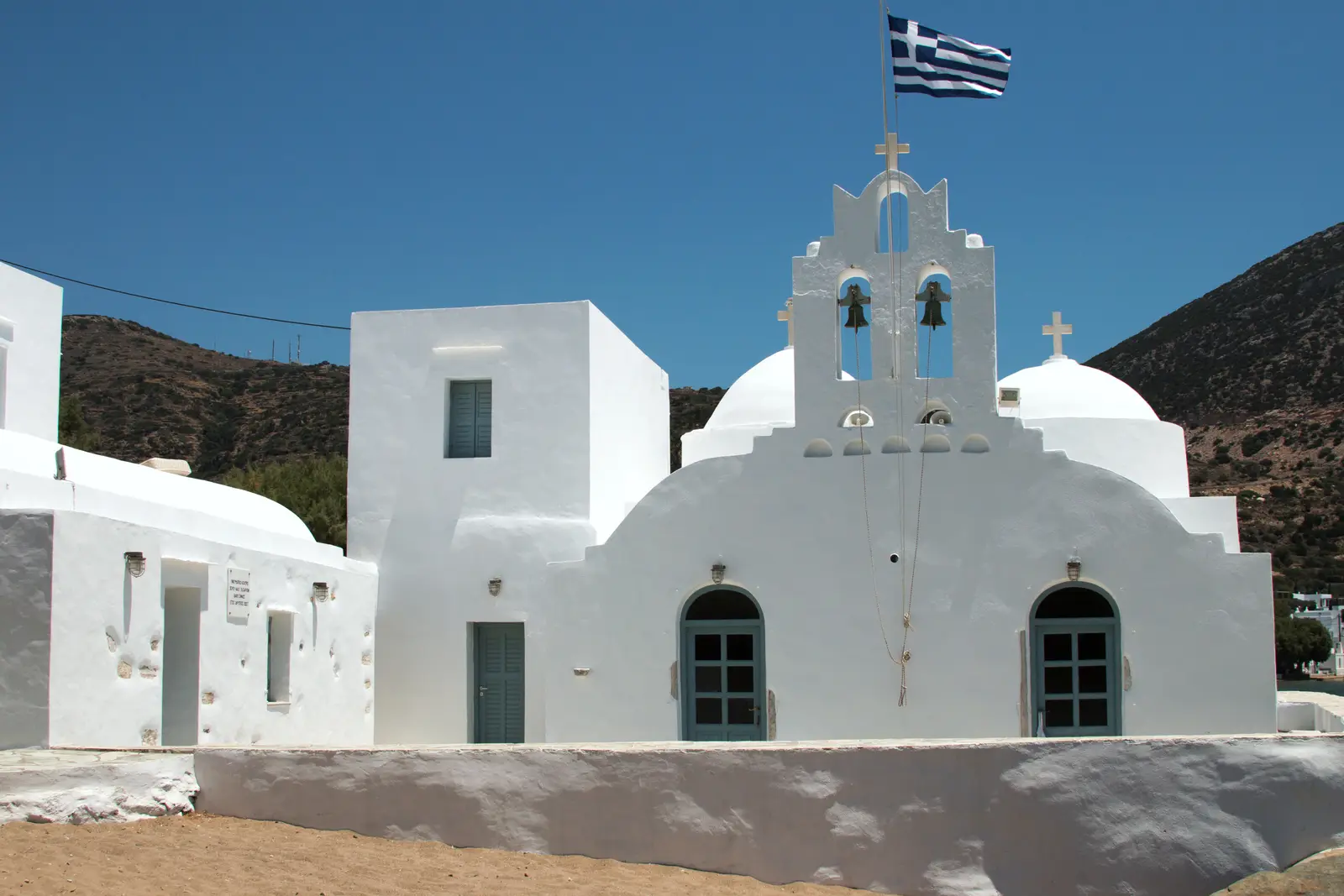
Taxiarchis of Vathi
On the sand, Vathi bay
The monastery on the beach. Its white walls come straight up out of the sand of the calmest bay on the island. Feasts on the 12th of July and the 5th of September.
How a Sifnos panigiri works
Each chapel's saint spends the year as a guest. A family volunteers to take the icon home, and that family is the panigiras. They keep the lamp lit in front of it all year and they pay for the whole feast when the day comes. By island tradition, more than three hundred icons are in Sifnian homes at any one time.
The dates for 2026, what happens at one and how to go are in the festivals guide.
Church and monastery figures from the official Sifnos island portal (sifnos.gr), verified June 2026.
Common questions about Sifnos churches
How many churches are there on Sifnos?
The municipality counts 237 churches and monasteries. That is on an island of 74 square kilometres with fewer than 3,000 people.
Can you visit the churches?
The big monasteries, Chrysopigi, Vrysiani and Profitis Ilias, are open to visitors in season. The small private chapels are usually locked except on their feast day. Cover your shoulders and knees for the monasteries and you are fine.
When is the Chrysopigi feast?
On Ascension Day, forty days after Orthodox Easter, so the date moves each year. The feast begins the evening before. In 2026 that is the evening of 20 May into 21 May. The icon goes out to the monastery by boat, then vespers, a shared supper and an all-night vigil.
What is a panigiri, and can visitors join?
A feast for a chapel's saint. Vespers first, then the hosting family feeds everyone. Chickpea stew from the wood oven, braised meat and wine, and a violin and lute playing until morning. Visitors are welcome, so go if one falls inside your dates.
Which churches are closest to the villa?
Panagia tou Vounou is a few minutes up the road from Platis Gialos. Chrysopigi is the next bay east, an easy walk along the coast via Apokofto or a short drive, and there are two car parks, one up by the monastery and one down by the beach. Our guests go to both in the evening.
Time your trip to a feast?
Tell us your dates. If a panigiri falls inside them, Elena will point you to it and tell you which table to sit at.
Photos: KASPAR, Zde, Evelin123. CC BY-SA 4.0 / CC BY-SA 3.0 GR, via Wikimedia Commons.