The Best Time to Visit Sifnos
Written by Elena Philippou, who hosts Villa Olivia Clara above Platis Gialos.Updated August 2026
Sifnos has a season, May to October more or less. Outside it most of the tavernas and shops close and the ferries thin out. If you ask us, come in June or September.
From November to April the ferries are few, many restaurants and most places to stay are shut, and the weather is unsettled. In May everything opens, and from then on the month you pick matters.
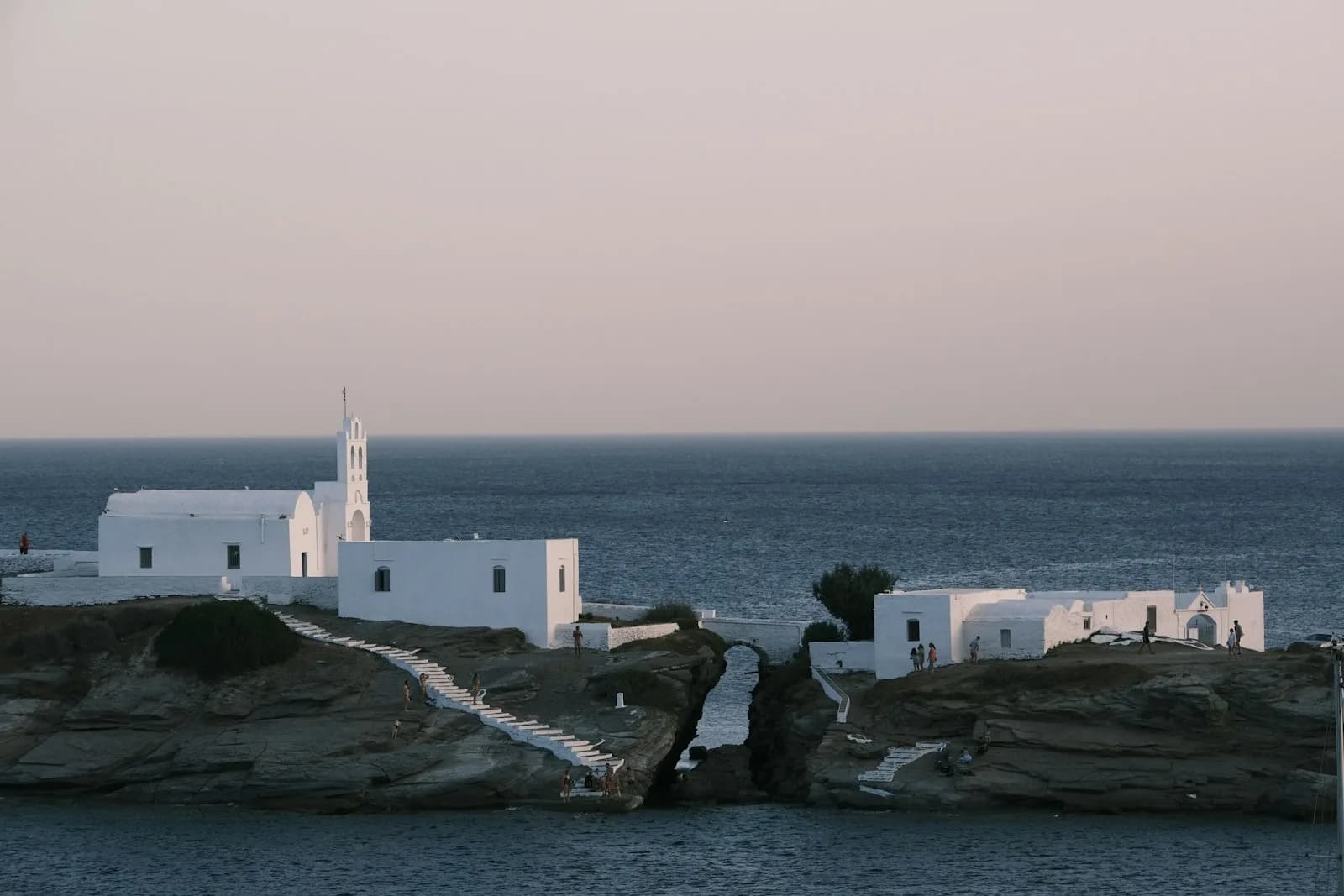
Season by season
May and early June (shoulder season)
Days are warm, low to mid-twenties °C in May and into the high twenties by early June. Evenings need a layer. The sea is still warming up after winter, about 19 to 20 °C in May and 21 to 22 °C by early June, which is cold for some. The hillsides are green and the walking trails are at their best. Very few people about. Some places do not fully open until mid-June, and a few tavernas are still finishing renovations. If one particular restaurant matters to you, write to them before you come.
July and August (peak season)
The hottest months, often over 30 °C, and the busiest and most expensive. Book the ferries and wherever you are staying months ahead. Weeks is too late. The sea is at its warmest, around 25 °C and up to 27 °C. The meltemi, the north wind, is at its most persistent in these two months and can blow for several days on end. It takes the edge off the heat. It also makes the north-facing beaches rough (Kamares, Cheronissos) and now and then it delays a fast ferry. Platis Gialos faces south and is more sheltered. Restaurants fill fast, so for anywhere good book the same day, or earlier if you can.
September (the local favourite)
September is the month we point people to, and the guests who come back every year pick it too. The sea is still very warm, about 25 to 26 °C in the first week and 23 to 24 °C by the end of the month, just below the August peak. The heat eases, and prices come down a little from August. The meltemi usually settles. After the first week the crowds thin out, and everything is still open, the boat trips included.
October (winding down)
Mild, low to mid-twenties °C by day, very quiet, and the sea is still fine for swimming in early October at around 22 to 23 °C. Come in October if you want the island mostly to yourselves. From the middle of the month places start to close, the smaller tavernas and guesthouses first, so the choice narrows. The ferries keep running but there are fewer of them.
November to April (off-season)
Most of what visitors use is closed. The restaurants, the beach bars, the boat tours, most of the rental houses. The ferry drops to a few crossings a week and rough weather is normal. Getting around is hard too. From roughly October to May the buses run mainly as school services, most car-hire firms shut for the season and taxis are scarce. In winter it is just us, 2,777 people at the 2021 census. A few places stay open all year for the people who live here. To Steki is the one to know: Antonis Venakis opened it in Exambela in 1984 and keeps that door open through the winter, while the Platis Gialos one on the sand is the summer half.
Our house is open from 15 May to 30 September. The villa above Platis Gialos.
The weather in Sifnos
Summer is dry. From June to September it hardly rains at all. Winter is mild, but wet and windy. The meltemi can start as early as mid-May and is usually blowing by late June. July and August are when it is most persistent. When it comes it blows hard for three to five days and then drops. It almost never stops the ferries altogether, but the fast ferries do get delayed or rerouted some days. The conventional ferries sail in weather the fast boats cannot.
Month by month
| Month | Sea | Daytime | Rainy days |
|---|---|---|---|
| January | 16–17 °C | 14–15 °C | 8–13 |
| February | 16 °C | 15 °C | 7–11 |
| March | 16 °C | 16–17 °C | 5–10 |
| April | 16–17 °C | 19–20 °C | 3–6 |
| May | 19 °C | 23–24 °C | 1–4 |
| June | 22–23 °C | 27–29 °C | 0–1 |
| July | 24 °C | 29–31 °C | 0–1 |
| August | 25 °C | 29–31 °C | 0–1 |
| September | 24 °C | 26–28 °C | 1–2 |
| October | 22 °C | 22–23 °C | 3–6 |
| November | 19–20 °C | 19–20 °C | 5–9 |
| December | 17–18 °C | 16–17 °C | 8–13 |
You can swim from mid-June to the end of October. The sea is warmest in August at about 25 °C, and September is almost the same at 24 °C. May, at around 19 °C, is for the brave.
The meltemi, the dry north wind, blows from about mid-May to mid-September and peaks in July and August. In season the calmest stretches are May, early June and late September into October. Plan boat days for those if you can.
Monthly averages, consistent with HNMS-derived climate normals for the nearest Cyclades stations (Milos and Naxos) and satellite sea-surface records, verified June 2026. For the days you are here, check the live forecast on meteo.gr.
What to pack
Pack layers. Even in July you will want a light long sleeve after dinner, because the meltemi cools the evenings quickly.
High-factor sun cream and a hat that stays on in wind. The breeze hides how strong the sun is.
Proper walking shoes, whatever the month. You will walk more than you expect, in the lanes of Kastro, on the monastery paths and on the old trails.
Swimwear from May to late October. The sea is about 25 °C in August and stays close to that through September.
In April, May and October add one warm layer and a light rain jacket. From November to March bring a proper jacket. The days are mild and the wind is cold.
Leave the formal clothes at home. Linen and sandals are fine in every taverna on the island.
Best time for…
With children, late June or early September. The sea is warm by then and the beach is not full.
As a couple, June or September. Everything is open and it is quiet.
For walking, May or October, before and after the 30 °C heat. In May the hills are still green.
For the food, September. Every restaurant is still open, the summer produce is at its best, and you can usually get a table without planning a week ahead.
For swimming, July to September, when the sea is warmest. September has the warmth without the August crowds.
For value, May or October. Prices are lower and dates are easier to find, and some places are shut.
Easter moves every year, April or May. Mastelo, lamb cooked slowly in a sealed clay pot, is the Sifnos Easter dish and you will find it almost nowhere outside Easter week. The island fills with Greeks who come for the food and the atmosphere. Book everything well ahead if you want to come then.
Festivals and panigiria
Every saint's day in summer has its panigiri. A village feast on the eve, with food, local wine, music and dancing, and anyone can go. The biggest is Panagia Chrysopigi on Ascension Day, in May or June, for the island's patron saint, when the icon goes out in procession by sea. Then the Dormition of the Virgin on 15 August, celebrated the night before. In September Artemonas holds the Cycladic Gastronomy Festival, named after Nikolaos Tselementes, the Sifnian cook. Ask us if one falls in your week and we will tell you where to go.
When to visit Sifnos, quick answers
When is the best time to visit Sifnos?
June and September. Warm sea, everything open and not too many people. July and August are hotter and busier, and fine if you book ahead and do not mind the meltemi. May and October are quieter and cheaper, and some places are still closed or only just opening.
What is the weather like in Sifnos?
Hot and dry in summer. Highs of 27 to 32 °C in July and August, 27 to 29 °C in June and 26 to 28 °C in September. Almost no rain from June to September. The meltemi, the north wind, blows on many days in July and August. May and October are warm, with the odd overcast day.
Is September a good time to visit Sifnos?
Yes. If you can choose, choose September. It is the month most people who come back pick. The sea is still very warm, 25 to 26 °C in the first week and 23 to 24 °C by the end of the month. Fewer people than in August, prices ease a little and everything is open.
What is the meltemi and when does it blow?
A dry north wind that blows across the Aegean in summer, strongest in July and August. It can blow for three to five days at a stretch and often reaches 5 to 6 Beaufort, sometimes 7 or 8 at the height of summer. It cools the air and makes the north-facing beaches rough. Platis Gialos faces south and is more sheltered. It rarely stops the ferries altogether, but the fast catamarans can be delayed or rerouted, and the conventional ferries sail in worse weather.
Is Sifnos worth visiting in May or October?
Yes, if you know what to expect. Both months are warm, and much quieter and cheaper than summer. In May the hillsides are green and the walking is at its best, and October has the warmer sea. Some restaurants, shops and places to stay will be shut or only just opening, so write to any place that matters to you before you come.
When is the sea warm enough to swim in Sifnos?
From mid-June for most people, at 22 to 23 °C. By late July the sea is 24 to 25 °C and it holds there through August, the warmest month at about 25 °C. September is just below that. By late October it starts to drop, but you can still swim at around 22 °C. May and early June can feel cold, 19 to 21 °C depending on the year.
What is the weather like in Sifnos in August?
Hot and dry, with the sea at its warmest, about 25 °C. August is also when the meltemi is most persistent, so the north-facing beaches can be rough for three to five days at a stretch, and rain is close to nothing.
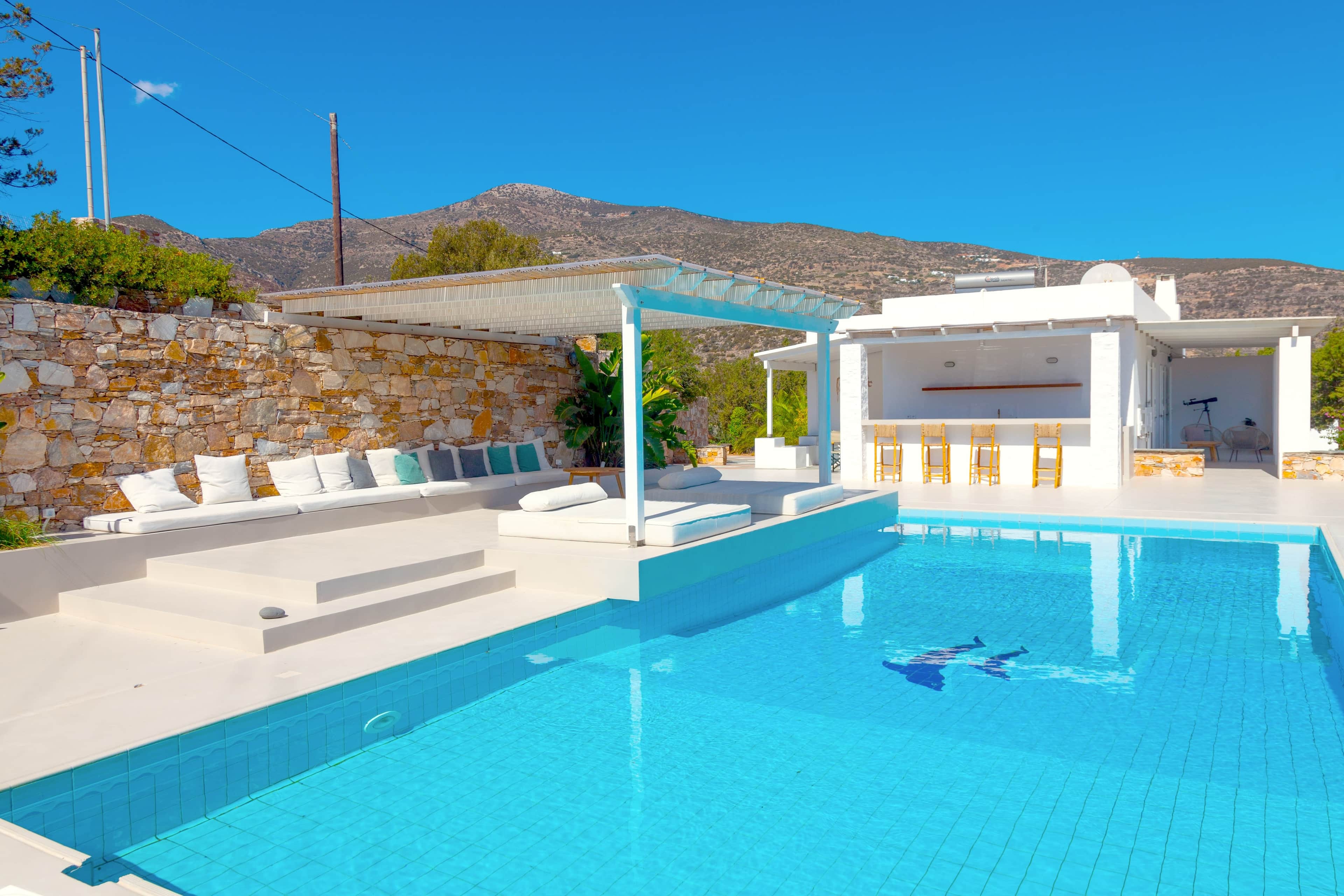
Villa Olivia Clara
Which week are you thinking of?
Our house above Platis Gialos opens in mid-May and closes at the end of September. Put your dates in and you will see straight away whether that week is free.
- 8 guests
- 4 bedrooms
- The whole house, one party