Sifnos Island Travel Guide
Where to go, when to come and which village to stay in, from the family who lives here
Written by Elena Philippou, who hosts Villa Olivia Clara above Platis Gialos.Updated August 2026
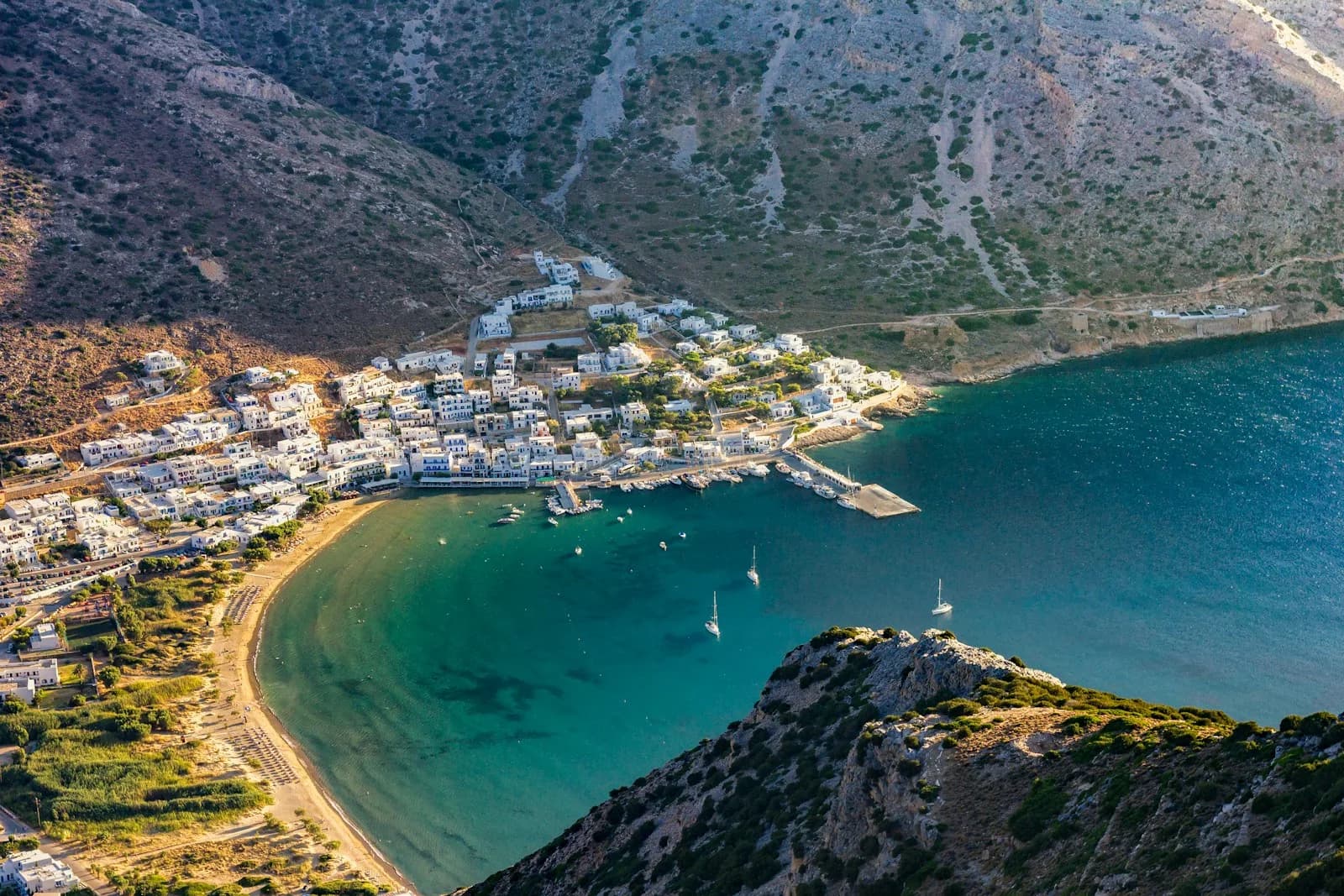
Welcome to Sifnos
Sifnos is in the western Cyclades, about 2.5 hours from Piraeus on the fast ferry. A small island, about 15 km end to end, 237 churches, and it is known more than anything for the food. Nikolaos Tselementes was born here. His 1920s cookbook shaped modern Greek cooking.
It is quieter than Mykonos or Santorini. The roads are narrow and the middle of Apollonia is closed to cars, so you park at the edge of the village and walk in for dinner. Hire a car. Without one you stay mostly in your village and take the bus for the rest.
Every village gets a paragraph below, what it is like and who it is for, so you can pick your base before you arrive.
Sifnos at a glance
- Ferry from Piraeus
- ≈2½ h by fast ferry, ≈5 h by conventional ferry
- Airport
- None. The nearest is on Milos, ≈40–50 min away by fast ferry
- Population
- 2,777 residents (2021 census)
- Area
- 73.94 km²
- Villages with a guide of their own
- 8 guides
- Food festival
- Artemonas, 17 September to 19 September
The island has its own radio station
RadioActive has broadcast on 91.3 FM from Artemonas since 1999. Riris Papatsarouchas runs it as a non-commercial station. Rock, dance, funk and jazz are what you hear. Every August the station throws a street party in the lanes of Artemonas, as it has since 2007.
What makes Sifnos different
If you have already done Milos and Paros, Sifnos will feel quieter and more local. Greeks come here for a slow week and the food.
We call it the food capital of the Cyclades
Tselementes was born here. The slow clay-pot dishes, revithada above all, are still cooked the old way, and you eat well without paying Mykonos prices.
Pottery, still made here
Sifnos has made pottery for some three thousand years, and about twenty workshops are still going. Go and watch, or try the wheel yourself, and take home a piece made on the island.
Walking between the villages
More than 100 km of old footpaths, many of them paved in stone, link the villages, the monasteries and the quiet coves, some of which you reach on foot or by boat.
Still itself
The island keeps its Cycladic architecture, with whitewashed houses and stone-paved lanes. The festivals are traditional ones, with home-cooked food and meze and music, and everyone is welcome at them.
Go deeper: Is Sifnos Worth Visiting? | The history of Sifnos | Things to do on Sifnos
Why Sifnos?
Small and quiet
Sifnos gets a fraction of the visitors that Mykonos or Santorini get. Outside August you can walk through Apollonia without a crowd, and rooms cost less than on those two. A week is enough to see most of the island without rushing.
The food
Nikolaos Tselementes was born here, and his 1920s cookbook shaped Greek cooking across the whole country. Order revithada first, chickpeas baked overnight in a clay pot. Other Cycladic islands cook it too. Here it is the dish. Then mastelo, lamb with wine and dill baked in the clay pot it is named after, and that one is Sifnos's own. The honey-and-sesame pasteli is made all over Greece, and here they still make it the old way.
Not sure which village to base yourself in? Where to stay in Sifnos, village by village
The villages of Sifnos
Apollonia
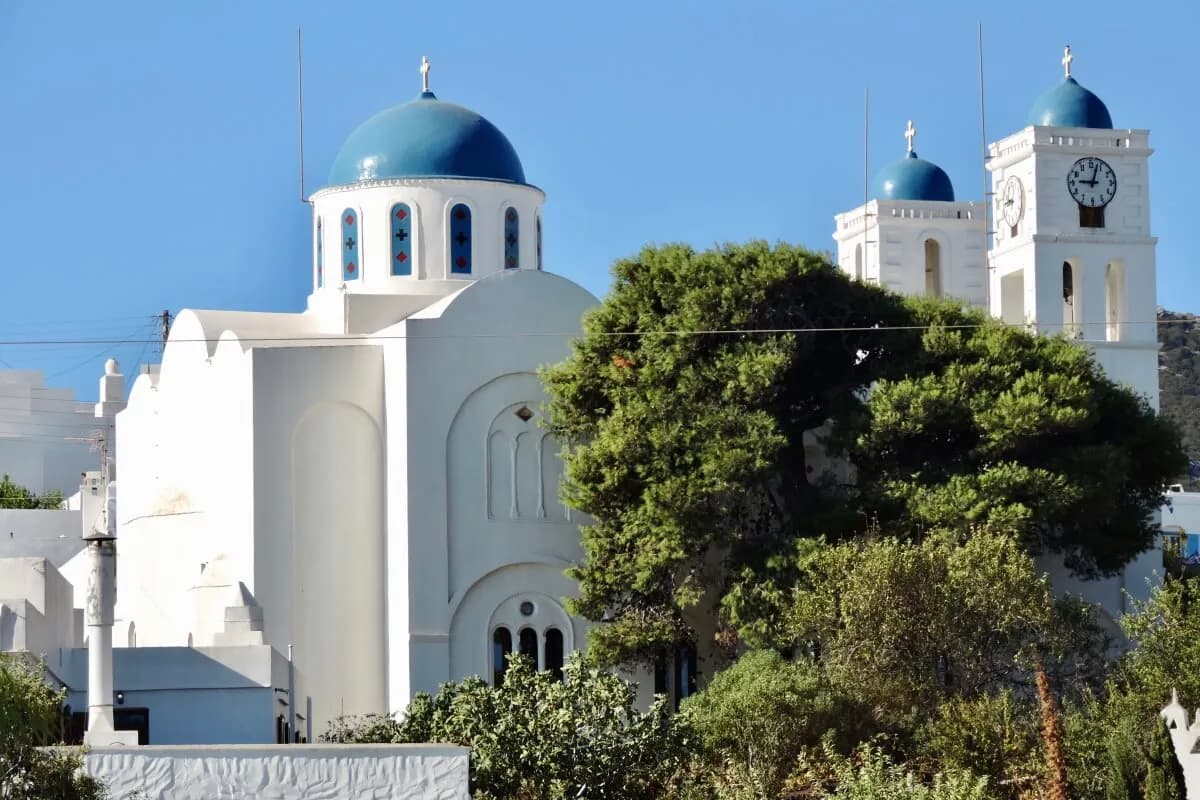
The capital, and the only village with any life after dark. The Steno is the pedestrian street, bars, jewellery shops and restaurants serving late on summer nights. Stay here if you want to walk to dinner and back without a car and are not looking for quiet early mornings.
Central Sifnos
Kastro
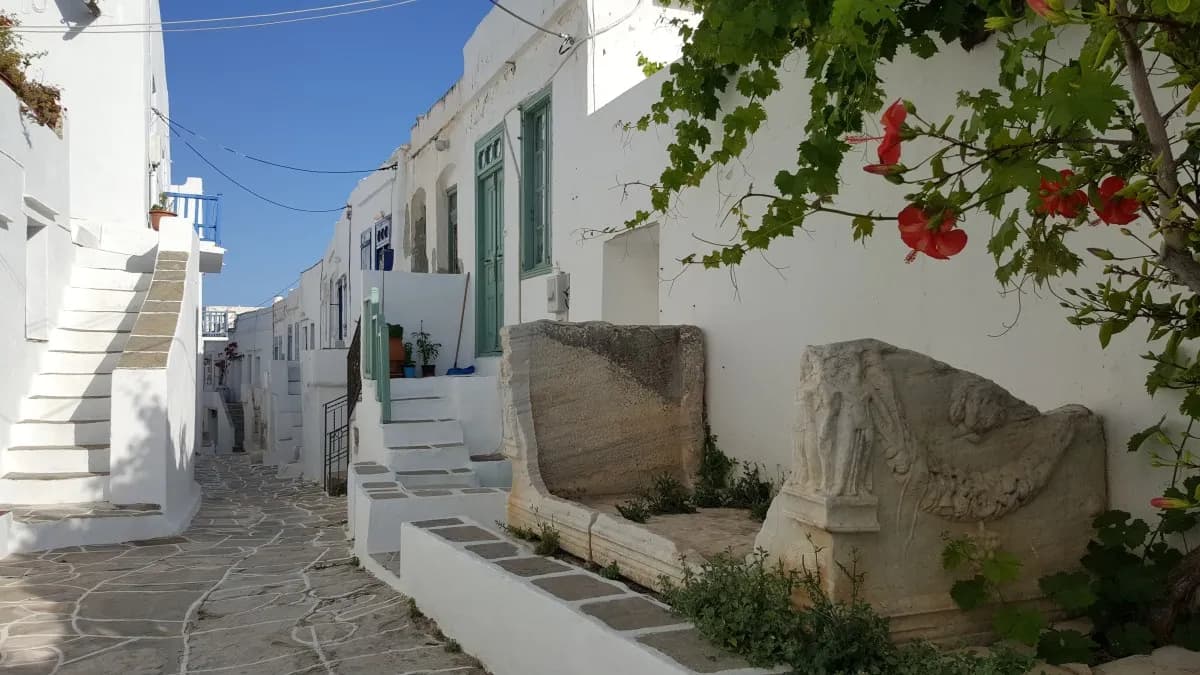
The medieval capital, on a clifftop on the east coast with the sea straight down on three sides. The Church of the Seven Martyrs is out on the rocks below, and there is a small Archaeological Museum. Kastro faces east. Come for sunrise over the sea, never sunset, whatever the listings say. No cars inside the village and only a handful of rooms to rent, so most people come for an afternoon.
Eastern Sifnos
Artemonas
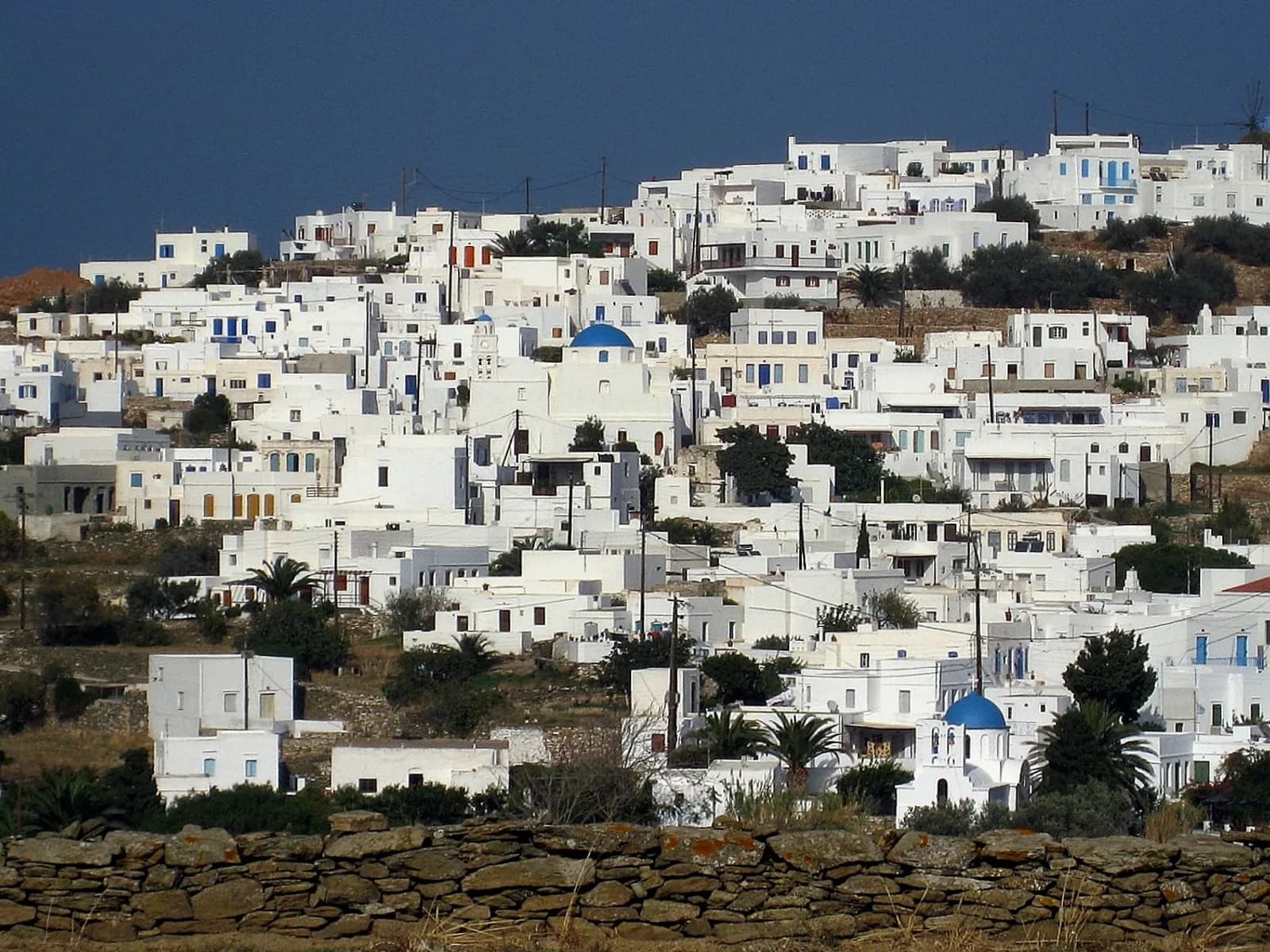
Apollonia's quieter neighbour, just to the north. The big neoclassical houses are 19th century, built by shipping families and by people who made money abroad and came home. Go for the amygdalota, the almond sweets, from Theodorou bakery down a lane off the main square.
Northern Sifnos
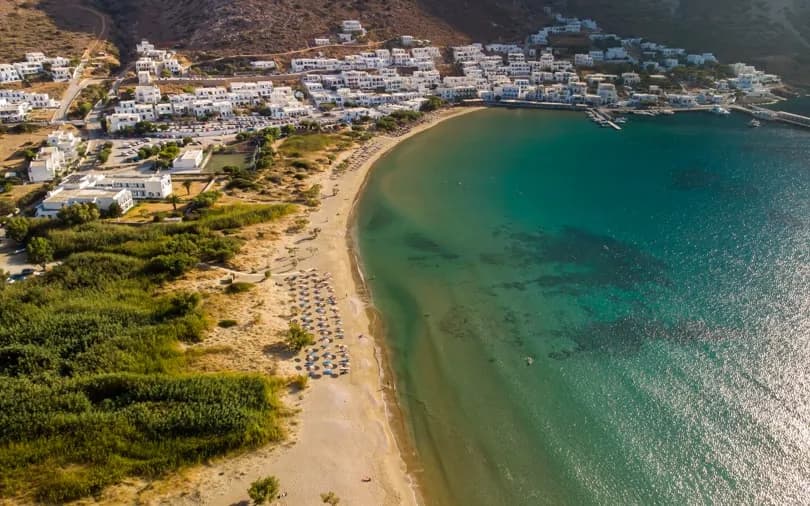
Kamares
The ferry port. The beach is sandy and organised, the water shallow and calm, good for children, and there is a row of tavernas along the front. Kamares faces west across the bay, so this is where we send guests for sunset. Supermarkets and car-hire offices are a short walk from the dock, so it is an easy first or last night.
Western Sifnos (Port)
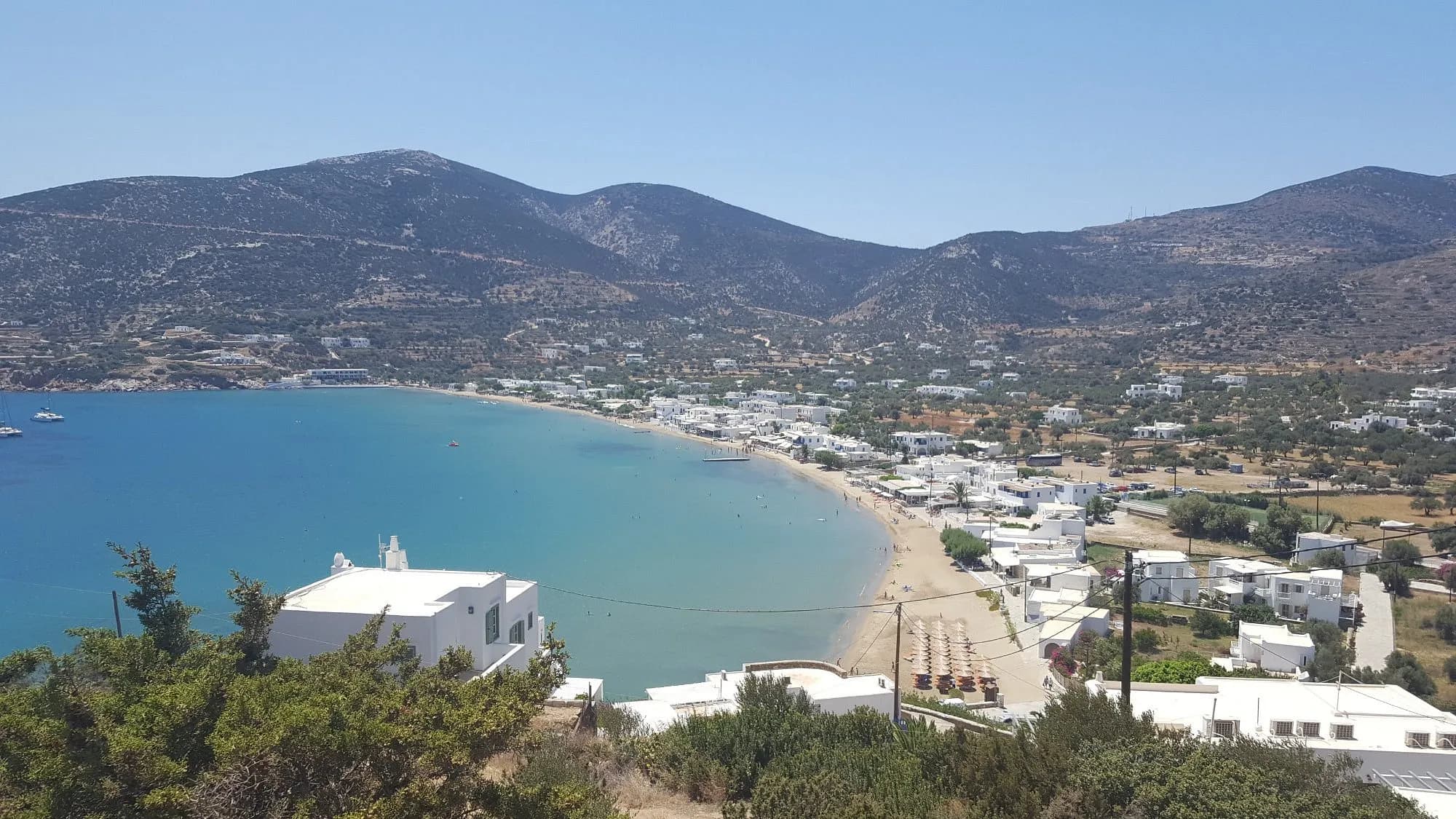
Platis Gialos
Our village. About 700 metres of sand on the south coast, one of the longest beaches on the island and the busiest, and the best organised. The water stays calm here when the north wind is blowing everywhere else. Restaurants in a row behind the beach. We send guests to Omega 3 for fish, and to Yalos. A small supermarket, water-sports hire and a bus stop. Villa Olivia Clara, our house, is on the hillside above, 7 to 10 minutes' walk down to the sand. Stay here with children, or if you want the beach every day without driving.
Southern Sifnos
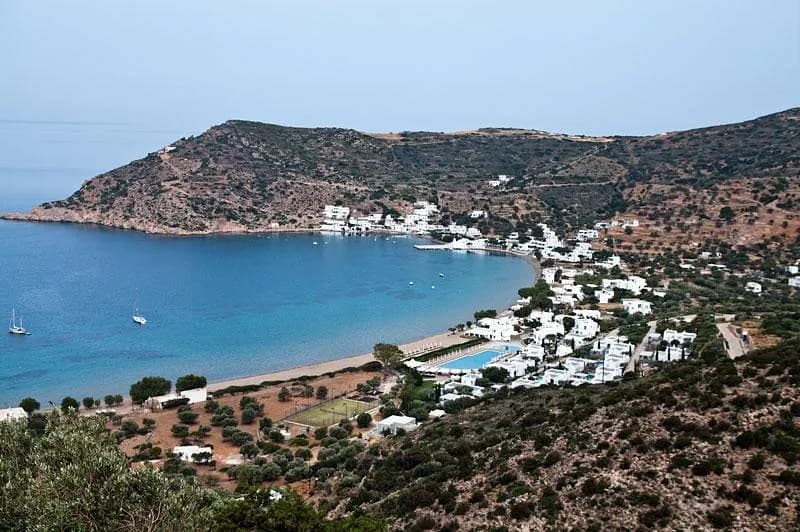
Vathi
A wide sheltered bay on the southwest coast, at the end of a narrow road that stops at the sea. The water is shallow and calm even in rough weather, as gentle as anywhere on the island for small children. Potters still work here. A few tavernas open in summer. No nightlife, no through traffic. Come here for complete quiet, and be happy to drive 20 minutes to Apollonia for anything you need.
Western Sifnos
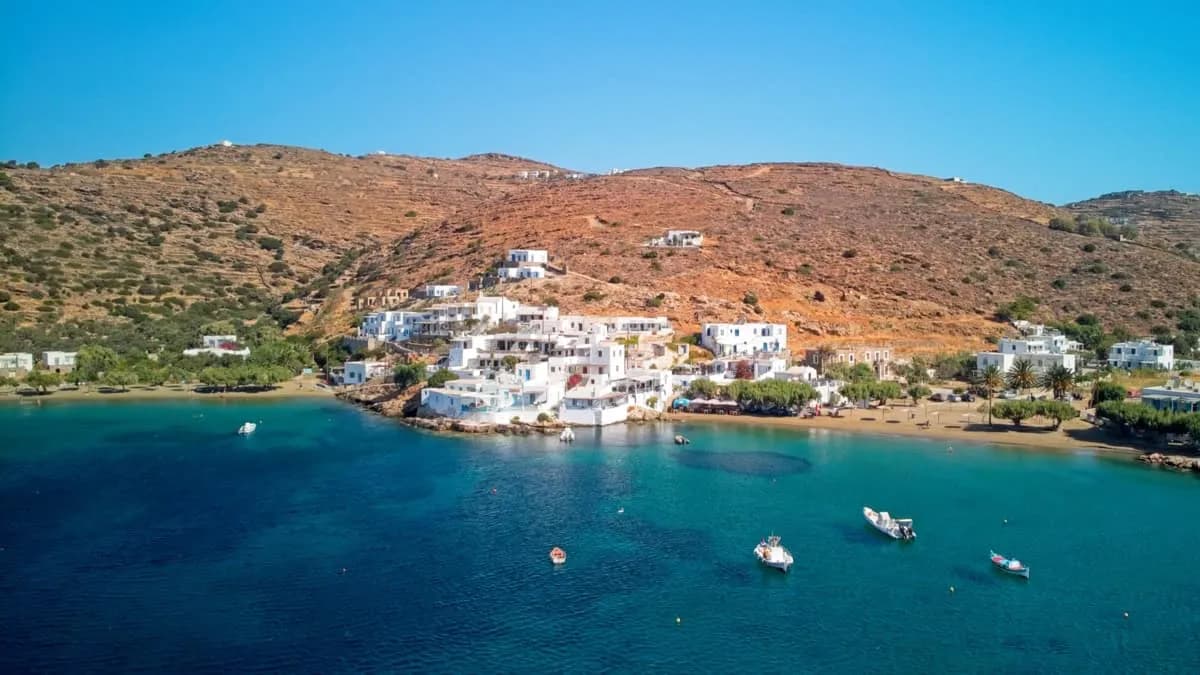
Faros
A former fishing village on the southeast coast. Three small sheltered coves within a 10-minute walk of each other, and the coastal footpath to the Chrysopigi monastery starts here, about 20 minutes each way. Walkers like it. Quieter than Platis Gialos, a handful of good fish tavernas, and the water is calmer than on the north-facing beaches, so it works for families with young children.
Southeastern Sifnos
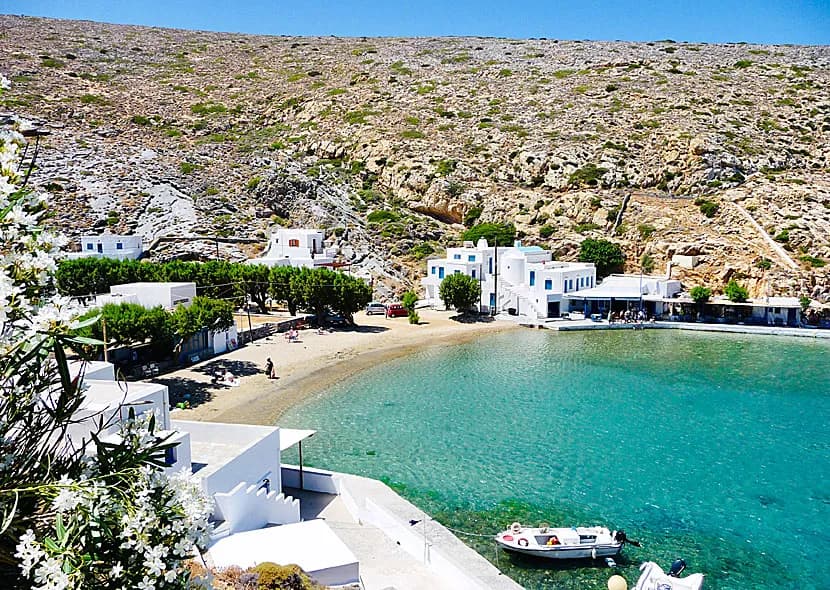
Cheronissos
The northernmost village, about 25 minutes by road from Apollonia. The bay is a small sheltered horseshoe of sand, protected from every wind but the south-westerly, so you can still swim there on a day the meltemi has closed the exposed beaches. A handful of fish tavernas along the little harbour. Go for the fish and the last working pottery. As a base for a whole holiday you would need a car and not mind the drive.
Northern Sifnos
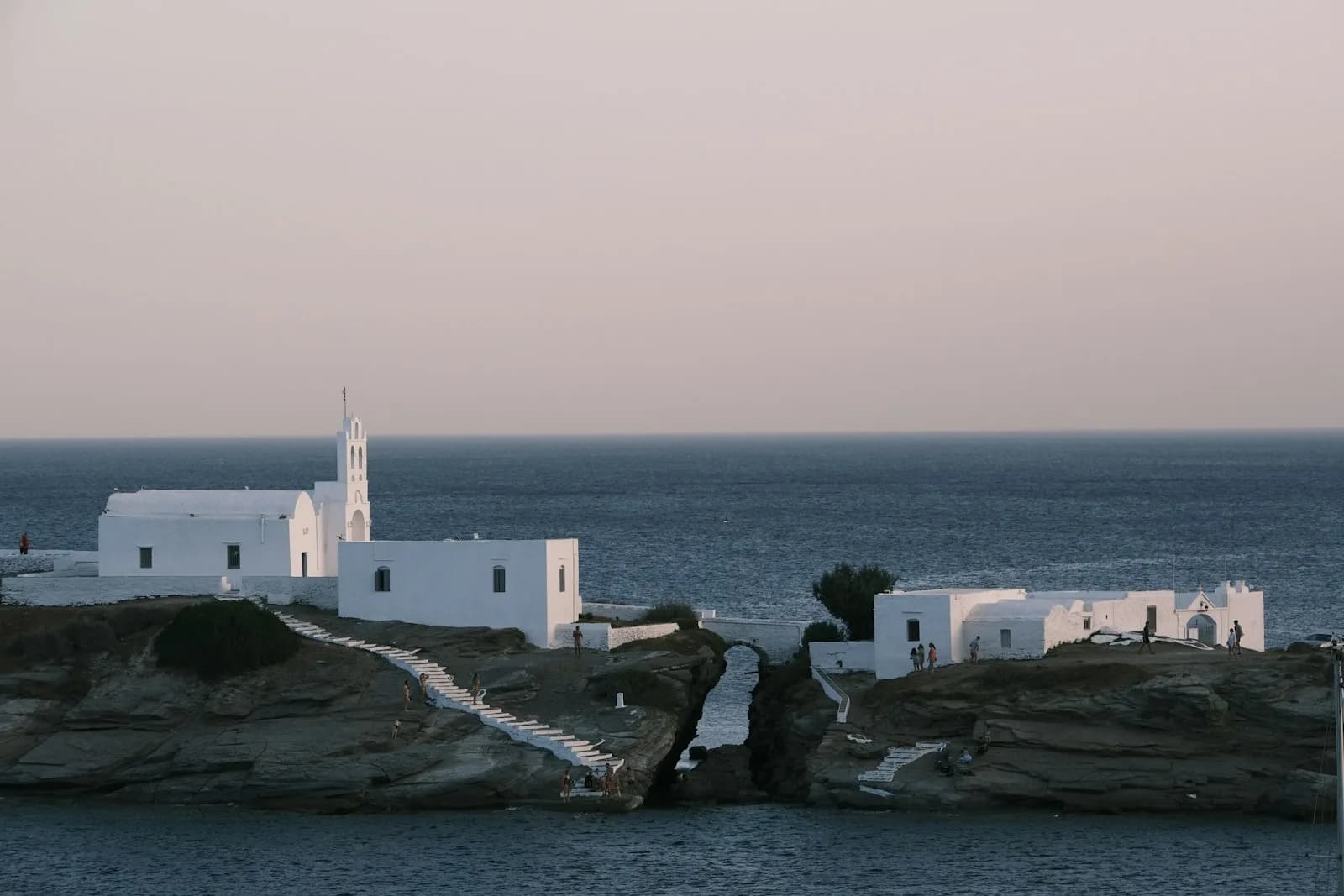
Chrysopigi
The monastery on the promontory, the picture on every Sifnos postcard. Founded in the 17th century on a rock off the southeast coast and joined to the shore by a narrow causeway. Panagia Chrysopigi is the island's patroness. Two small beaches either side of the headland. The water is calm and clear. It is still an active monastery and opens to visitors in the mornings (women cover their shoulders). Two car parks, one up by the monastery and one down by the beach. From Faros it is 5 minutes by car. From Platis Gialos walk it, 30 to 40 minutes along the coastal path.
Southeastern Sifnos
The quieter inland villages
ExambelaCentral Sifnos
A hill village on the road from Apollonia down to Platis Gialos, so you will drive through it. From the high point you see west to Kamares and east to Kastro. Nikolaos Tselementes was born here in 1878. A working village with not much for visitors.
KatavatiCentral Sifnos
A small settlement just south of Apollonia. On foot the two run into each other. The paths south start here. Marked trails 5 and 6 leave the village past the Angeloktisti church for Fyrogia, the Skafi valley and Vathi, and the climb to Profitis Ilias branches off at Fyrogia. For Kastro, walk on into Apollonia and pick up the old kalderimi (stone path) there, about 45 minutes, or an hour if you start from Katavati. No taverna in Katavati itself, and a few studios to rent. For dinner and the shops you walk into the capital.
Kato PetaliCentral Sifnos
One of the two Petali hamlets, just below Apollonia on the hillside, joined to the capital by a short footpath. Mostly private homes, a few small guesthouses, and views across the central plateau. Petali is the local word for a stony rise, Kato Petali is the lower village on it and Pano Petali the upper.
Pano PetaliCentral Sifnos
The upper Petali hamlet, a little above Kato Petali and to the north of it, with wider views over the ridge toward the coast. A handful of white cube houses and a small church. No shops and no taverna. If you stay here it will be in a private villa, and you walk into Apollonia, about 10 minutes, for everything else.
TroullakiNorthern Sifnos
A scattered hamlet in the hills north of Apollonia, among terraced farmland. Mostly private houses. One of the hiking routes from the capital to Cheronissos passes through it, so you will see the name on the trail maps. And there is a restaurant, Sunset in Troulaki, for the sunset.
When to come
Summer (June to September)
- •Book your accommodation well ahead. This is the peak season.
- •Daytime highs usually sit around 28 to 30°C (82 to 86°F) and nights stay near 23°C (73°F), with the odd heatwave day into the mid-30s. Light clothes, sun cream and more swimwear than you think.
- •Go to the popular beaches early in the morning or late in the afternoon. The crowd is there in the middle of the day.
- •Book dinner, especially in Apollonia and at the busier seaside tavernas.
Spring and autumn (April to May, October to November)
- •The months for walking. Daytime highs in May and October are around 22 to 24°C.
- •Fewer people, and rooms cost less.
- •In spring the hillsides are in flower. In autumn the sea is still warm.
- •Ferries run less often and some places close, especially in late autumn. Check before you count on anything.
Things to do
The beaches
Our beach guide covers 19 beaches, Platis Gialos and the sheltered coves at Vathi and Faros among them, and says which wind each one is protected from.
See the beach guideBoat trips
We recommend A La Mer, the boat company in Platis Gialos. They run day trips to Poliegos and Kimolos and over to Milos, and private charters.
Boat trips from Platis GialosThinking about Sifnos?
Villa Olivia Clara is our house on the hillside above Platis Gialos, 7 to 10 minutes' walk from the beach, with a private pool and room for eight. We host it ourselves, so write to us directly.