Culture
Sifnos Pottery and Where to Buy It
Where to buy pottery on Sifnos
The chickpea stew you will eat here was baked in a clay pot made on the island, and the workshops that make those pots are still open. This is where to find them, and what to buy.
Written by Elena Philippou, who hosts Villa Olivia Clara above Platis Gialos.Updated September 2026
9 min read
Sifnos has made pots for some three thousand years. The island has a lot of refractory clay, the kind that stands up to fire, and potting fed families here long before anyone came on holiday. It still keeps workshops open. The pots were made to cook in. On other Greek islands the ceramics are decorative.
If you have had revithada here (the chickpea stew baked slowly in the oven, the dish the island is known for), you have already eaten out of one. It tastes like that because of the pot.
Why Sifnos became a pottery island
The clay. Sifnos has a lot of refractory clay, weathered out of the island's schist. For generations potter families turned it into cooking pots, storage jars and vessels for water, and sold them across the Cyclades and on the mainland. The working potteries today are at Vathi and Kamares. A few more are inland and around Platis Gialos.
The craft passed from parent to child. Many of the workshops open today have been in the same family for generations, and the potters here have worked without a break for more than three hundred years. Pots were being made on the island some three thousand years ago, and the Archaeological Museum in Kastro has ceramics from then. They look a lot like what is on the shelves now.
Why the pots matter to the food
The dishes Sifnos is known for taste the way they do because of the clay pots they are cooked in.
Revithada is baked overnight in a sealed clay pot, round and lidded, thrown from the island's own fireproof clay. On Sifnos that lidded oven pot is called a skepastaria. The potters also sell it as a tsikali, the everyday Greek word for a clay cooking pot, so we use that word here. The clay holds the heat and gives it out slowly and evenly, so the chickpeas soften without drying out or losing their taste. Make revithada in a metal pot or an ordinary ceramic one at home and it comes out different. Mastelo works the same way. Lamb or kid goes on vine twigs in a sealed clay pot and roasts slowly, and the clay takes up the moisture and gives it back while it cooks.
The potteries here are still open because the kitchens still need them. For the dishes themselves, read our guide to Sifnos food and traditional dishes →
Where to buy pottery on Sifnos
Vathi, the old potters' village
Vathi was a potters' village until the Second World War. It sits in a sheltered bay on the west coast, 15 to 20 minutes' drive from Apollonia. For a long time people went there by boat, and being cut off like that kept the craft alive. There are still working studios in and around the village. Some are more workshop than shop. If the door is open and someone is working, it is fine to look around and ask questions. The beach is shallow and calm, good for children, so make a morning of it.
Kamares, the port
Most people see Sifnian pottery for the first time here, in the shops along the waterfront and the streets behind it. Cooking pots and decorative pieces. Have a look on the day you arrive, or before the ferry home. We are 20 to 30 minutes away by car.
Apollonia and Artemonas
Apollonia, the capital, has ceramic shops with work made on the island, and so does Artemonas next door. Some of it is the traditional shapes, some is newer design. The studios around Apollonia are working studios, and in some you can watch the potter at work.
Platis Gialos, near us
There are several studios around Platis Gialos, and the road from Kamares down to Platis Gialos, through Apollonia, passes more than one workshop on the way. Drive it slowly. They sit back from the road and often a small sign is all there is.
The whole island, village by village, is in our Sifnos island guide →

What to buy and take home
Pots to cook in
Take home a tsikali, the lidded cooking pot, and use it. Revithada, or anything that cooks slowly. Bowls, plates and small dishes pack more easily and get used just as much.
Is it made on the island?
Some of what the tourist shops sell as Sifnos pottery was made somewhere else. Buy from a studio and ask whoever is in front of you whether the piece was made here. A studio piece usually shows the hand that finished it, and no two are quite the same.
Looking after a clay pot
Before you cook in a new tsikali, soak it in water for several hours, then rub the unglazed outside with olive oil to season the clay and keep it from cracking. Heat it slowly, never a cold pot straight onto high heat. Hand-wash it. It does not go in the dishwasher. Do that and a Sifnos pot will last you decades.
The tsikali as a souvenir
Buy a tsikali if you like the idea of cooking in it. It gets used, and you will know the village it came from.
Trying it yourself
In some seasons a few studios run sessions where you try the wheel, or hand-building, with the potter beside you. Good on the one rainy day of your week, and older children get on well with it.
Ask us before you come and we will tell you which studios are running sessions that month. It changes season to season, so do not book one months ahead from a website.
Other crafts on the island
Pottery is the big craft here. Weaving and embroidery have a long history on the island too, and some of the craft shops in Apollonia and Artemonas sell textiles, table runners and cushion covers and embroidered pieces in the old style. Apollonia also has a handful of silversmiths who make their jewellery on the island. Ask where a piece was made, since some are brought over from Athens.
If you are still choosing which village to stay in, start with Where to stay in Sifnos →
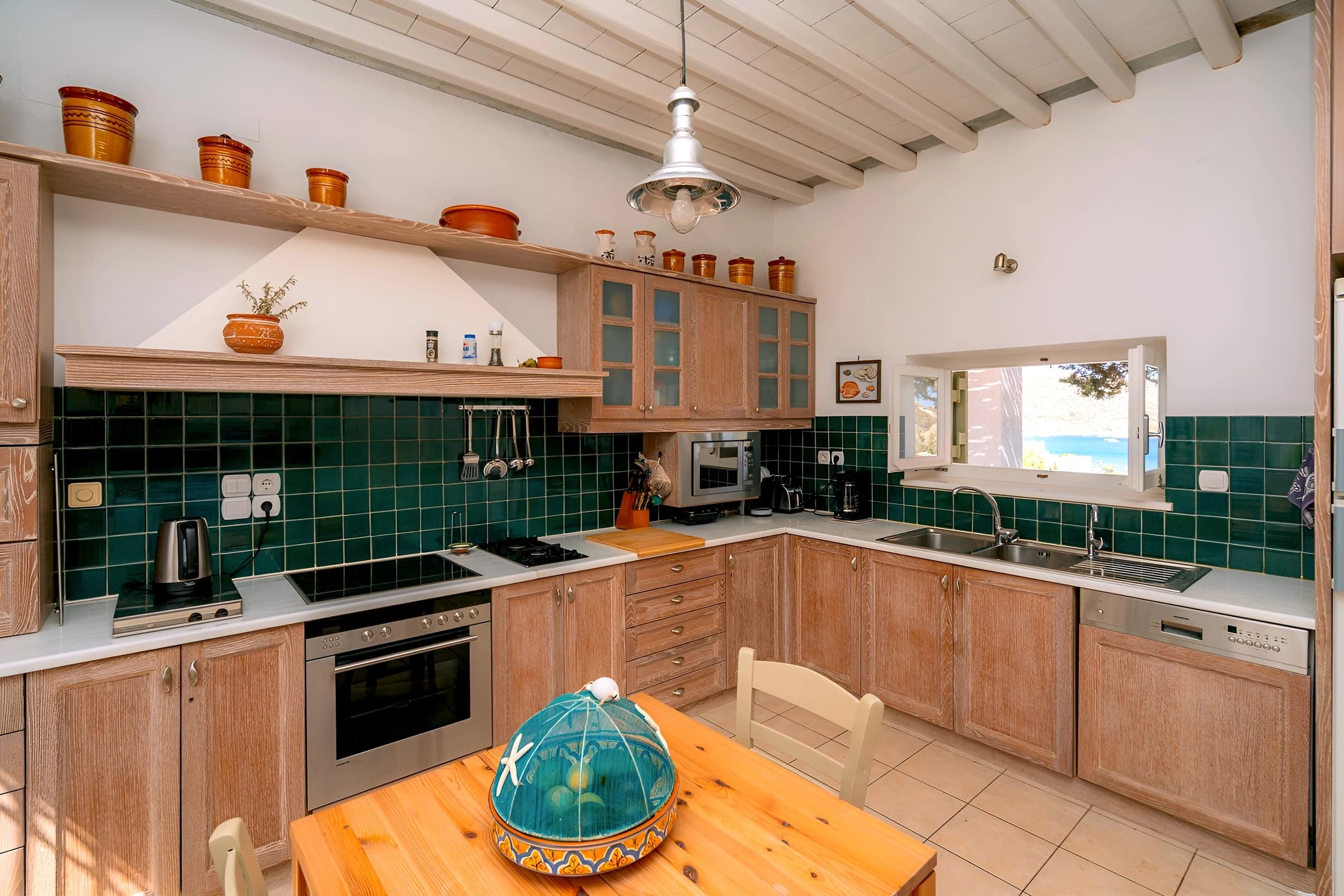
The kitchen at our house is a full one, set up for proper cooking, slow clay-pot dishes included. Buy a tsikali in Vathi or Kamares and you have somewhere to use it. I have lived on Sifnos for over ten years, so ask me which studios to go to, and which bakery. See the four-bedroom villa and its kitchen
Questions guests ask about Sifnos pottery
Why is Sifnos famous for pottery?
Sifnos has rich refractory clay, and it has made pots from that clay for some three thousand years. For a long time they were a major export, sold all over the Cyclades and on the mainland. The craft stayed alive because the kitchens still need it. Revithada and mastelo are still cooked in clay pots.
Where can you buy pottery in Sifnos?
Buy from a working studio if you want a piece made on the island. Vathi was a potters' village until the Second World War and still has studios. Kamares has a cluster of shops near the port. Apollonia and Artemonas have studios with traditional and newer work. And the road from Kamares down to Platis Gialos passes several workshops, each marked with a small sign off the road.
What is the link between Sifnos pottery and its food?
The dishes the island is known for, revithada (chickpeas baked slowly) and mastelo (lamb roasted slowly), are cooked in sealed clay pots, tsikalia. The clay holds the heat and lets it out slowly and evenly, and the dishes depend on that. The kitchens still need the pots, so the potteries are still open.
Can you visit a pottery workshop in Sifnos?
Yes. Many studios welcome visitors, and some run sessions where you try the wheel or hand-building yourself. The studios in Vathi are working studios, and in peak season some of them run scheduled sessions for visitors. Ask us which ones are running the month you come.
What should you buy as a Sifnos ceramic?
A tsikali, the lidded cooking pot. Cook revithada in it, or anything slow. Unglazed bowls and plates are also good and pack more easily. Ask whether the piece was made on the island, because the mass-produced ones in the tourist shops may have come from somewhere else. Studio pieces show the hand that finished them and no two match exactly.
What is a tsikali?
A tsikali is the traditional Sifnian clay cooking pot, round-bellied and lidded, thrown from the island's own fire-resistant clay. Revithada is baked in one overnight in a wood-fired oven. On Sifnos that lidded pot is properly a skepastaria. The potters sell it as a tsikali too. The clay takes in moisture and gives it back slowly, and revithada gets its texture from that.