Running a Villa on a Diesel Island, Honestly
Written by Elena Philippou,Updated June 2026
7 min readHere is a sentence you will not find on most villa websites in the Cyclades: more than 90% of the electricity on our island is generated by burning diesel. It arrives by tanker, it runs through generators above Kamares, and it powers every “eco-retreat” and every “sustainable boutique hideaway” in the brochures. Ours too. For now, and partly.
We publish this because we think the truth is more useful than the badge. This is what sustainability actually looks like from inside one villa on one small Greek island: the grid, the water, the upgrades, and the marketing rules that are about to make honesty mandatory anyway.
The grid nobody photographs
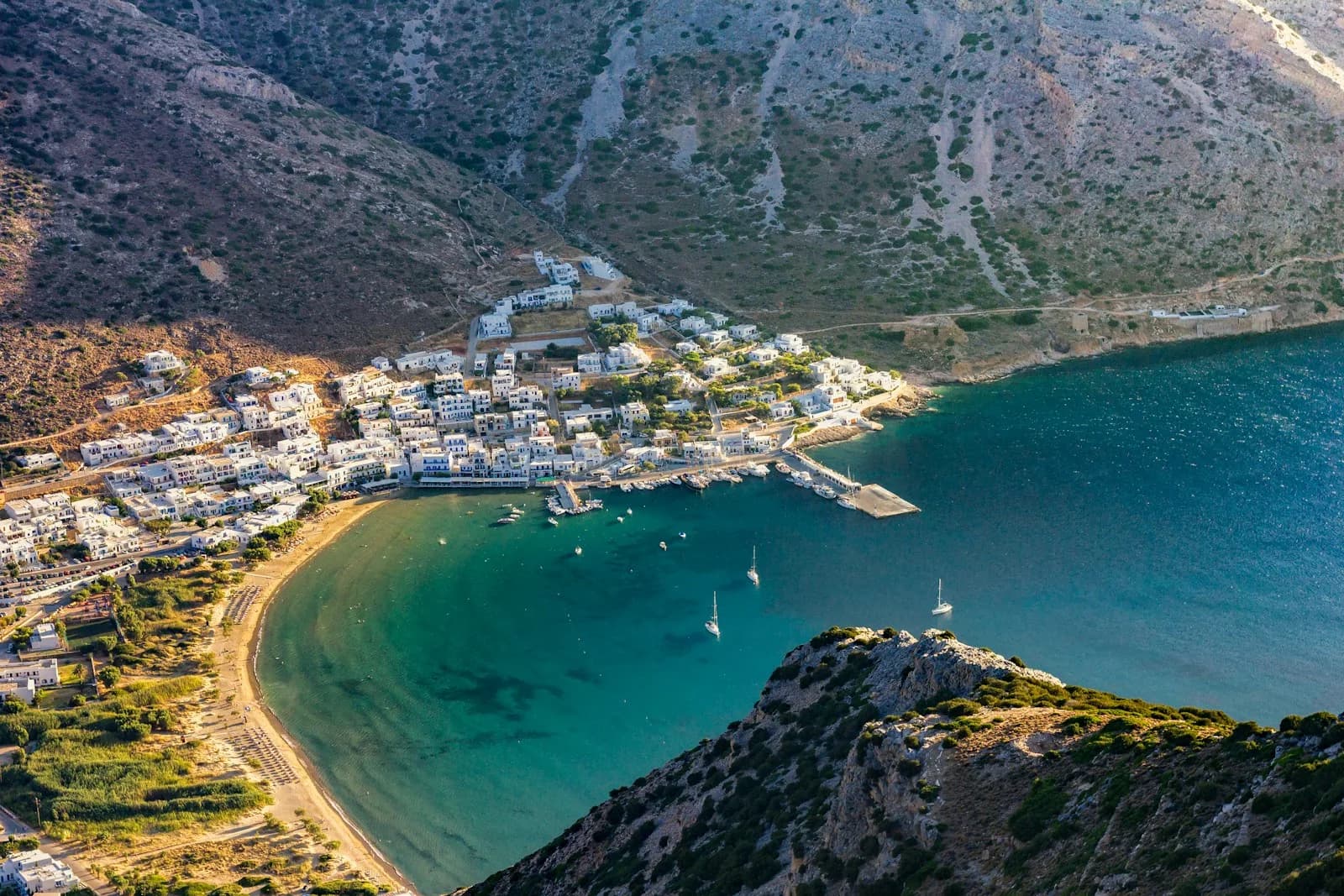
Sifnos is one of Greece's non-interconnected islands: a small autonomous grid, diesel generators doing the heavy lifting, two small wind turbines and a scatter of solar panels doing the rest. Roughly seventeen gigawatt-hours a year, the large majority of it fossil. Every air-conditioned August afternoon on this island runs, mostly, on shipped-in fuel.
It is changing, at sea speed. In 2026 the Cyclades interconnection finally reached our neighbours: Milos, Serifos, Folegandros and Santorini are being tied to the mainland grid by hundreds of kilometres of submarine cable. Sifnos isn't on that cable; our own link is planned but undated. And for a decade, a local energy cooperative has pushed for something better still: a wind-and-storage plant owned by the island itself, with an application that has sat with regulators since 2016. When people say islands are slow, they rarely mean the islanders.
Water is energy wearing a different shirt
The island's other constraint is quieter. Sifnos drinks from boreholes, springs, old rainwater cisterns and seawater desalination. And desalination is electricity, which on Sifnos means diesel again. In high summer, when the population multiplies, the two problems become one. It's why the rain cistern every old Sifnos house was built around still matters. Ours waters the garden and fills the pool: winter rain doing summer work, the way the island always did it. The municipality, for its part, is moving toward solar-powered desalination; the logic is the same at every scale.
What one villa can actually do about any of this
Not everything. Anyone who claims otherwise is selling something. What we've done so far, in the order it happened: matched our electricity contract with Guarantees of Origin from certified Greek renewable production (a procurement choice; the physical electrons here are still mostly diesel's); counted our footprint and published the number, roughly 8.6 tonnes of CO₂ a year before our solar went in; installed a solar water heater; and, this summer, put our own panels on the property. They're not all live yet and there's no battery, so they cover daytime use. We'll publish their first season's real numbers rather than a projection.
Next, in order: battery storage, a heat pump to retire the winter heating oil, better insulation, an electric or plug-in hybrid car for the service runs. Each one gets announced when it's done, not when it's intended.
The “carbon neutral” badge is dying. Good
From 27 September 2026, new EU consumer rules outlaw exactly the language this industry leaned on for a decade: “carbon neutral” claims based on offsets are blacklisted outright, and generic labels (eco-friendly, green, climate-friendly) are banned unless backed by recognised certification. We rebuilt our own sustainability page around those rules months early, and it made the page better: specific, dated, checkable.
If you take one thing from this essay, take the three questions we'd ask any accommodation that calls itself green: Where does your electricity physically come from? What did you actually install in the last two years? And what haven't you solved? A real answer to the third question is the most reliable sustainability signal in travel.
Why we publish this
Partly because guests deserve the working, not just the conclusion. Partly because the island deserves the pressure: the cable should come, the cooperative should be licensed, and visitors who understand the stakes are part of that. And partly, honestly, because trust is the only marketing we have: we're one family with one house, and you'll be drinking coffee with us on the terrace. It would be a strange place to lie to you.
The full working, line by line
Everything above with the receipts (what's done, what's pending, what's unsolved) lives on our sustainability page. And if you want the live version, ask Elena on the terrace.
Quick answers
Is Sifnos powered by renewable energy?
Mostly not yet. Sifnos runs an autonomous island grid where more than 90% of electricity comes from diesel generators, with two small wind turbines and some solar covering the rest. The mainland interconnection reached neighbouring Milos, Serifos, Folegandros and Santorini in 2026; Sifnos's own link is planned but not yet dated.
Can a hotel legally claim to be carbon neutral in the EU?
From 27 September 2026, not on the basis of offsetting. EU Directive 2024/825 blacklists offset-based “carbon neutral” and “climate neutral” claims, and bans generic terms like “eco-friendly” without recognised certification.
Is desalinated water sustainable?
It solves scarcity but costs energy, and on a diesel-powered island that energy is mostly fossil today. That's why rainwater cisterns still matter on Sifnos, and why the municipality is moving toward solar-powered desalination.
What should you ask a hotel that calls itself sustainable?
Three things: where its electricity physically comes from, what it actually installed in the last two years, and what it hasn't solved. The third answer tells you the most.